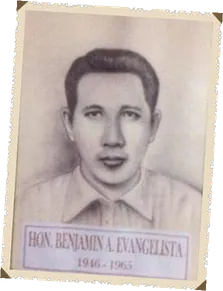
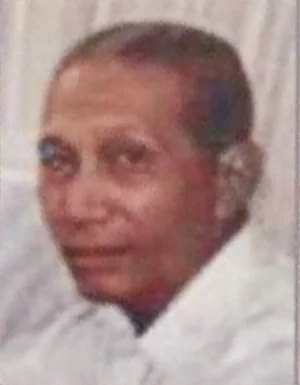
Benjamin Evangelista y Alabado
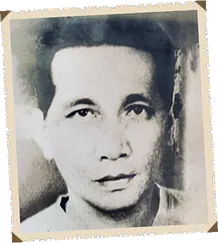
Benjamin Evangelista y Alabado was the younger son of Don Quintín Canciller Evangelista y Alonzo and Doña Amalia Alabado y Cunanan, born on February 3, 1908, in Candaba, Pampanga. He made the barrio of Pescadores his life’s stage, serving as Capitán del Barrio from 1946 to 1965 in the very district that the book calls the bailiwick of the Evangelistas. He married María Salud Honsayco y Pelayo and raised five sons whose own families continue the Candaba line. He died in 1972, remembered both as a public servant and as the generous uncle who arrived from the harvest with a jeep full of watermelons and honeydew.
Benjamin’s father, Don Quintín, was a hacendero and a Councillor of Candaba, elected in 1921. His mother Amalia Alabado y Cunanan, known in the family as Ima, came from the Alabado line and gave Don Quintín two sons before his second marriage to Adelaida Sangalang produced twelve more children. Benjamin’s elder brother, Dr. Dominador Evangelista y Alabado, became a dentist and a founding officer of the Pampanga Dental Association.
Despite the eventual move of Don Quintín’s second family to Paco, Manila, Benjamin remained in Candaba. The bahay-na-bato on Taft Street, with its spiral staircase and basement of antique santos, was part of his inheritance, but his true territory was Pescadores, the barrio where the Evangelista name had carried weight since the 1700s.
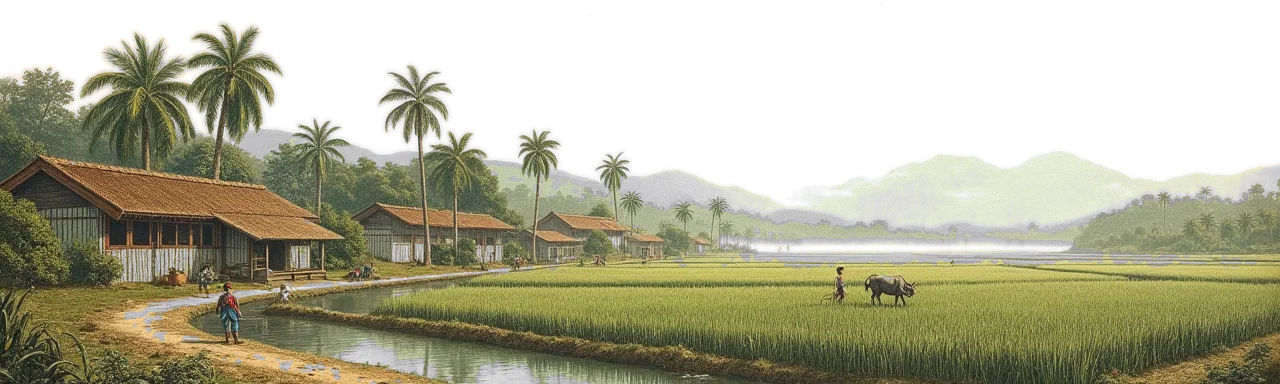
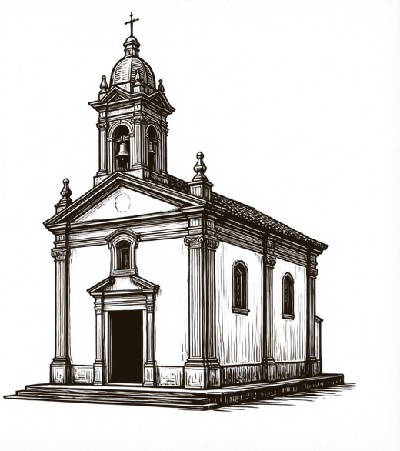
Pescadores lies near the heart of old Candaba. The barangay hall on Encarnación Street stands with the belfry of San Andrés Apostol Catholic Church behind it, and Evangelista Street runs perpendicular to Encarnación. Here, in the eighteenth century, the Evangelistas were part of the Principalía, the noble ruling class. The imposing ancestral houses or bahay-na-bato that once surrounded the church included the home of Don Santiago Canciller Evangelista, the great Capitán Tiago.
It was in this same district, the book says, that Benjamin’s grandson Emerson Evangelista y Malang would later win two elections as Barangay Chairman, walking in the footsteps of his grandfather and of the long line of Evangelistas who had governed Candaba since the 1700s. For Benjamin, Pescadores was not merely a barrio; it was the family’s political inheritance.
Benjamin married María Salud Honsayco y Pelayo, born on February 7, 1907. The couple had five sons: Ceferino (1930–2000), Diego (born 1933), Conrado (1935–2007), Sócrates (1937–2007), and Rickardo (born 1939). The boys grew up in Pescadores, surrounded by cousins, farmland, and the constant presence of the Candaba Church, where their family had been baptized and married for generations.
María Salud died on July 22, 1942, during the war years, when Benjamin’s younger sons were still small. Benjamin continued to serve Pescadores while raising his sons. Each of the five boys would later found families whose names—Evangelista y Honsayco—still appear in the book’s later pages.
The book’s captions follow Benjamin’s descendants across several pages. Ceferino married Catalina Pelayo; their children include Honorio, Alvin, Wilma, and Wilfredo Silvino. Diego married Evangelina Malang and became the father of Emerson, the future Barangay Chairman. Conrado’s family with Jessie Iglesia-Rodríguez produced Jessica, Vladimir, Raymond, Armand, Joseph, and Maria Concepción. Sócrates and Rickardo also raised large families whose names thread through the clan photographs.
These family portraits are not merely decorative. They show the seventh and eighth generations of Evangelistas born and raised in Candaba since the time of Don Marcos Evangelista in the 1700s, a continuous residence that few Filipino families can document with such clarity.
The book remembers Benjamin’s character through a small but telling detail. Vilda Evangelista-Javier, daughter of Benjamin’s half-brother Virgilio, recalled that when she was a child her “Uncle Benjamin” was always very thoughtful and generous. Whenever he came up from Candaba during harvest time, he would bring a jeep filled with watermelons and honeydew to share with relatives in Manila.
The anecdote suggests a man who understood that abundance was meant to be shared. Whether serving as Capitán del Barrio or arriving with fruit for the Paco household, Benjamin kept alive the Evangelista instinct for hospitality that his mother Ima Amalia had practiced in the Taft Street mansion.
Benjamin’s political legacy continued through his grandson Emerson Evangelista y Malang, son of Diego and Evangelina Malang. Born on February 15, 1967, Emerson was elected Barangay Chairman of Pescadores in 2007 and again in 2010, serving until December 5, 2011. He campaigned with the slogan “taga PESCADORES ku,” walking the same streets his grandfather had governed.
The book explicitly connects Emerson’s victories to the Evangelista tradition of public service, naming the great-great-great grandfather Don Rosalino Canciller Evangelista and his brothers who served as Gobernadorcillo in 1841 and 1856, as well as Don Gregorio and Don Pedro who held the Municipal Presidency in 1898 and 1908. Benjamin’s own long tenure as Capitán del Barrio forms one of the strongest links in that chain.