Dr. Bienvenido Restituto Evangelista y Gumabon
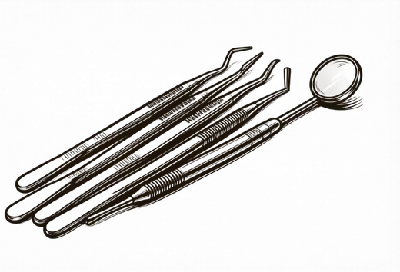
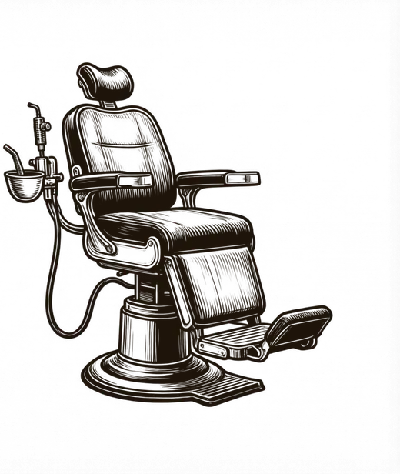
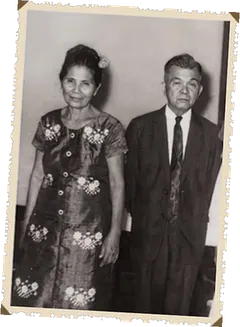
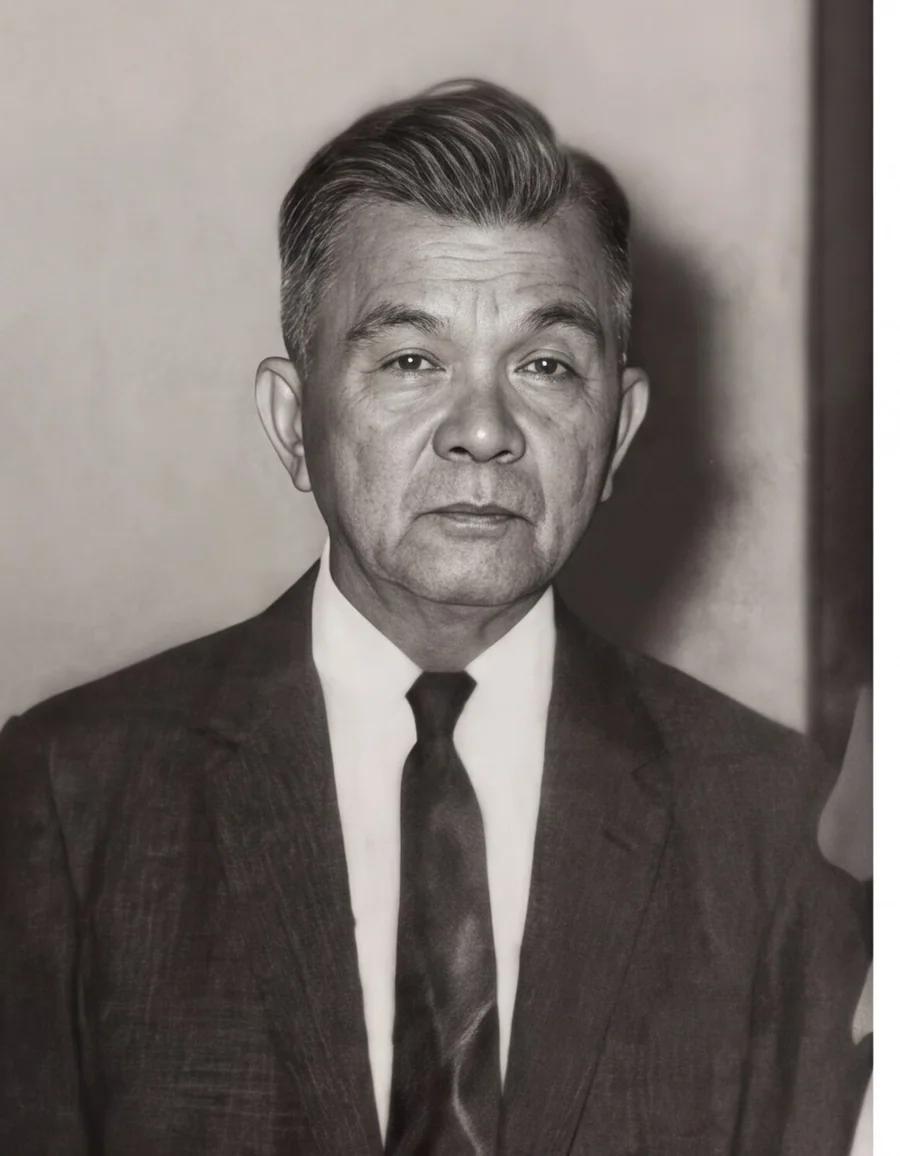
Trained in Dentistry at the Philippine Dental College in Manila, the youngest son of Don Ambrocio Canciller Evangelista and Doña Juanaria Gumabon y Guevarra built his dental practice on the island of Bohol. He married Rosario Gavas, and together they had eight children: Virgilio, Bienvenido, Chito, Fe, George, Rosa, Tomas, and Virginia Evangelista y Gavas — Virgilio following his father into dentistry.
Bienvenido Restituto Gumabon Evangelista was born on May 10, 1910, in Candaba, Pampanga, the youngest of the twelve children of Don Ambrocio Canciller Evangelista y Alonzo and Doña Juanaria Gumabon y Guevarra. His father, a fifth-generation hacendero, had built one of the largest bahay na bato houses in Candaba and won a Bronze Medal at the 1904 St. Louis World's Fair for fishing equipment and products.
Bienvenido grew up in a household of siblings that included Adela, Maria Florencia, Ester, Alfredo, Maria Soledad, Santiago, Maria Asuncion, Tomas, Bernardita, Pacifica, and Margarita. The family name Gumabon came from his mother's noble line: Doña Juanaria was the daughter of Don Antero Gumabon y Dalusuno and Doña Alipia Guevarra y Gatbonton.
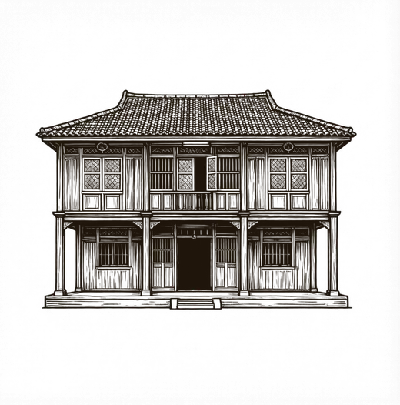
The house in which Bienvenido was raised was a large two-story bahay na bato on Pescadores Street, later renamed Evangelista Street because most of Don Santiago Canciller Evangelista's children built mansions there. The property covered about three lots and included an orchard with chico, sineguelas, macopa, santol, sampaloc, cacao, suha, and caimito trees.
The interior was decorated with antiques, including large portraits of Don Ambrocio and Doña Juanaria. Scenes from the 1961 film Noli Me Tangere were filmed at the house. It was from this household that Bienvenido and his siblings went out into their respective professions and marriages.
All of Don Ambrocio's sons were well-educated. Santiago and Tomas studied Pharmacy, while Bienvenido studied Dentistry at the Philippine Dental College in Manila. His training placed him in the capital at a time when the family's network of educated professionals was expanding across medicine, pharmacy, dentistry, and the priesthood.
A baptismal record preserved from Candaba Church shows Bienvenido Restituto Evangelista y Gumabon born in 1910, together with the baptismal records of his older siblings Adela and Tomas. The document anchors his birth in the parish records of the town and confirms the family's longstanding place in Candaba's Catholic life.
After completing his training, Dr. Bienvenido Restituto Evangelista built his dental practice on the island of Bohol. Like his brother Tomas, who moved to Camiguin and Mindanao, Bienvenido chose to establish his career outside Candaba, taking the family's professional reach into the central Philippines.
The book does not describe the specific town or patients of his practice, but it records the broad fact that he built a dental practice on Bohol. This decision followed the same pattern of dispersion that carried other Evangelista children and grandchildren to Manila, Camiguin, the United States, and other places where opportunity called.
Dr. Bienvenido Evangelista married Rosario Gavas, who was born in 1915 and died in 2004. The marriage united the Evangelista-Gumabon line with the Gavas family and produced eight children: Virgilio, Bienvenido, Chito, Fe, George, Rosa, Tomas, and Virginia Evangelista y Gavas.
The couple raised their family in the setting of Bohol and the dental profession. Rosario survived her husband by more than two decades, living until 2004, and the children carried both the Evangelista and Gavas names forward. The book does not record the date or place of their wedding.
The eight children of Bienvenido and Rosario were Virgilio, Bienvenido, Chito, Fe, George, Rosa, Tomas, and Virginia. Virgilio, born in 1945, chose the same profession as his father and became a dentist. The book names the others but does not describe their careers or residences.
With eight children, the Bienvenido branch was one of the larger immediate families among Don Ambrocio's descendants. Rosario Gavas, who lived until 2004, would have seen her children through most of their adult lives, though the book does not record those decades in detail.
Bienvenido's move to Bohol was part of a wider scattering of Don Ambrocio's children. Adela married and settled with Dr. Esteban Arroyo; Santiago established his pharmacy family in Manila; Tomas ventured to Camiguin and Cotabato; and Bienvenido built his dental practice on Bohol. Only the daughters who remained single stayed in the Candaba household.
This dispersion mirrored the broader history of the Evangelista clan, whose members moved from Candaba to Manila, Mindanao, the Visayas, and eventually the United States. Bienvenido's Bohol practice therefore belongs to the larger story of a provincial elite that carried its professions across the archipelago.
Dr. Bienvenido Evangelista y Gumabon died on April 19, 1981. The book records his death alongside the deaths of his parents and siblings, marking the end of the youngest son's generation of the Ambrocio branch.
His life, though less documented than those of some siblings, illustrates the family's pattern of advanced education, professional practice, and migration beyond Candaba. Through his children and through Virgilio's continuation of dentistry, his branch of the Evangelista-Gumabon line extended into the late twentieth century and beyond.
Dr. Bienvenido Restituto Evangelista y Gumabon was the last of Don Ambrocio's sons to die, passing away on April 19, 1981. His death closed the generation that had grown up in the bahay na bato on Evangelista Street, studied in Manila, and dispersed across the islands.
What survives of him in the record is modest: a birth date, a baptismal entry, a dental college, a practice on Bohol, a wife, eight children, and a son who followed him into dentistry. For a family as prolific as the Evangelistas, even this modest record is enough to mark a life that carried the Candaba name into the central Philippines and into the late twentieth century.