José Evangelista y Castro
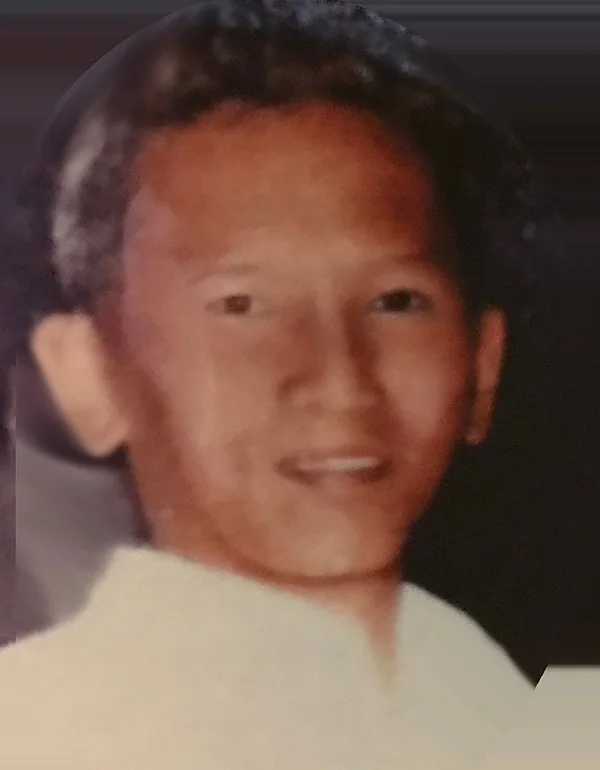
José Evangelista y Castro carried the Evangelista name into Candaba’s twentieth-century politics and medicine. A son of Municipal President Don Pedro Canciller Evangelista and Doña Mercedes Castro y Constantino, he was the town doctor in an era when public trust mattered more than campaign posters. The Candabeños held him in such high esteem that he reportedly never needed to campaign when he ran for office; when he stood for Vice-Mayor in 1966 he won in a landslide without spending a day on the campaign trail, even as his party mates were defeated. Though the townspeople later clamored for him to run for Mayor, he politely refused, preferring the quiet work of healing to the noise of higher office.
José was born into one of Candaba’s most consequential families. His father, Don Pedro Canciller Evangelista y Alonzo, had been initiated into the Katipunan in 1895 by Dr. Pio Valenzuela y Alejandrino, risking exile or execution for the dream of Philippine independence. After peace returned under American rule, Don Pedro married Doña Mercedes Castro y Constantino of Polo, Bulacan, the sister of Marciana Castro who had married Dr. Pio Valenzuela. Together Don Pedro and Doña Mercedes had four children: Luz Sofronia, Aurora, Beatriz, and José.
The household was steeped in both nationalism and public duty. Don Pedro’s name appeared in the official newspaper of the Philippine Revolutionary Government, El Heraldo de la Revolución Filipina, in December 1898, when he served as a Delegado de Justicia. That evidence of advanced education set a formidable standard for the next generation. José grew up watching his father balance political office, legal work, and family life, an example that would shape his own path.
On January 7, 1908, Don Pedro took up the political mantle his own father, Don Santiago Canciller Evangelista, had held as Gobernadorcillo from 1881 to 1883. Don Pedro was elected Municipal Presidente of Candaba under the Partido Nacionalista and went on to modernize the town. Public schools rose in Salapungan, Bahay Pare, Lanang, and Mandasig; a public cemetery and municipal water supply were established for the health of all Candabeños. He also served as the town’s official Notary Public, appointed by the judges of the Court of First Instance in Pampanga.
Don Pedro’s legacy of service was not limited to the public square. His eldest daughter Luz Sofronia married her first cousin Dr. Dominador Evangelista, binding two branches of the family together. Daughter Aurora married José Castor and later became the mother of Dr. Rene Castor y Evangelista. For José, the message was clear: an Evangelista was expected to serve, whether with a pen, a gavel, or a stethoscope.
José chose medicine. The townsfolk looked up to him as their doctor, a vocation he practiced with conspicuous generosity. According to his son, the renowned cardiologist Dr. José Evangelista y Limjoco, his father never accepted payment for his services. World War II interrupted the country in countless ways; for José, it meant that he was unable to take the Medical Board examinations. Yet the lack of a formal board credential did nothing to diminish the confidence the community placed in him.
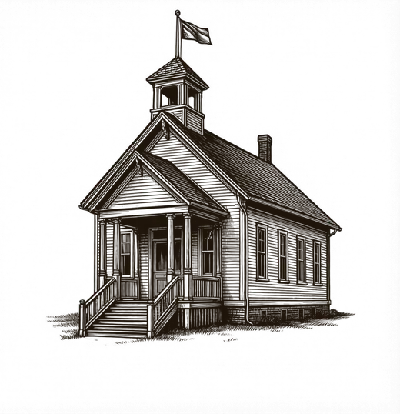
Beyond the clinic, he invested in education. He served as President of the Board of Trustees at St. Andrew’s Academy in Candaba, the school where his son Dr. José Evangelista, Jr. would later graduate as Class Valedictorian in both elementary and high school. In this way, José linked the family’s medical and educational traditions, serving the town’s health in one season and its children’s future in another.
Although José was not interested in politics, his popularity thrust him into the limelight. He ran for Councilor and remained undefeated. In 1966, when he stood for Vice-Mayor, he won in a landslide victory at a time when every other candidate on his party slate was defeated. The Candabeños wanted more of him and begged him to run for Mayor, but he politely refused. For José, the highest office was apparently not the most important one; the trust of the people was.
His restraint set him apart from many contemporary politicians. Where others might have seized the moment, he returned to the work that had earned the people’s affection in the first place. When he passed away at the age of fifty-five, his constituents deeply mourned the man they regarded as a true champion for the less fortunate.
José married Doña Aurora Limjoco, and together they had three children: Erlinda, Cenen, and José, Jr. The younger José was born in Candaba on January 21, 1944, and would grow up to become Dr. José Evangelista y Limjoco, the celebrated cardiologist, businessman, and philanthropist known today as Dr. Joe. The family line thus moved from the nineteenth-century nationalism of Don Pedro to the twentieth-century medicine of José, Sr., and then to the global medical career of José, Jr.
The 1929 photograph of Vice-Mayor José Evangelista, Sr. and Doña Aurora Limjoco-Evangelista with relatives and friends from Polo, Bulacan, captures the couple at the center of an extended kinship network. Among those present were Pedro L. M. Suaw, Fortunato Reyes, and Paz Limjoco, reminders that the Evangelistas were connected by blood and marriage across several provinces.
Dr. José Evangelista y Limjoco inherited his father’s discipline and expanded it on a world stage. Born in Candaba, he grew up in a home where academic excellence was expected. After St. Andrew’s Academy, he pursued medicine abroad, eventually becoming a distinguished cardiologist and the CEO of healthcare and real-estate ventures in Michigan. His achievements are described as echoing those of his Evangelista ancestors who once ruled Candaba as part of the Principalía.
Dr. Joe also carries forward his father’s generosity. Together with his wife, Dr. Stella Salgado-Evangelista, he diversified into property development, construction, and specialized patient care. The younger José’s life thus extends the same Evangelista instinct for leadership, learning, and service that his father had practiced in a modest Candaba clinic.
After José’s death, Doña Aurora Limjoco-Evangelista turned her energies toward education. In 1988 she founded the Unisite Learning Center, a pre-Elementary school in San Fernando, Pampanga. Their daughter Erlinda Evangelista-Tongol, known for her culinary expertise, later took over the school and guided its expansion. In 2003 the institution was renamed Lyndale Academy, Inc., an acronym drawn from the names of the founders: “LYN” from Erlinda and “DALE” from the initials of Doña Aurora Limjoco-Evangelista.
Under Erlinda’s stewardship, Lyndale Academy grew to include pre-elementary, elementary, and high school levels. The academic legacy that began with Doña Aurora’s widowhood and José’s service to St. Andrew’s Academy thus continues to serve the people of San Fernando, Pampanga, forging ahead under the next generation.