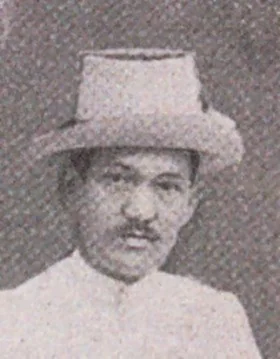
Don Juan Canciller Evangelista y Alonzo
Don Juan Alonzo Canciller Evangelista y Alonzo was born in Candaba, Pampanga, in 1879, the eighth of Don Santiago “Capitan Tiago” Canciller Evangelista’s children by his second wife, Doña Antonia Alonzo y de la Cruz. He grew up in the bahay na bato on Calle de la Virgen, the mansion that his eldest brother Emiliano would later inherit, and came of age during the final decade of Spanish rule. When Capitan Tiago died suddenly in 1895, the estate partition gave Juan a building on Calle de Municipio and properties in Barrio Salapungan, tying him to Candaba’s town center and its agricultural lands. He remained in Candaba throughout his life and died there in 1952, a quiet member of a generation that inherited the wealth and obligations of the Principalia at the moment of its transformation under American rule.
Don Santiago’s first marriage to Doña Eusebia Sangco y Santos in 1863 was brief and produced no children. After her death, he fathered Emiliano with Antonia Alonzo in 1867, then Ygnacia in 1868, Pedro in 1870, Ambrocio in 1871, Antonino—who died in infancy—in 1874, and Luisa in 1876. Don Santiago finally married Antonia on October 6, 1877, when he was thirty-one and she was thirty. After the wedding came Don Quintin in 1877, Don Juan in 1879, Doña Graciana in 1880, and a last son, Atilano, who died in infancy.
Juan thus belonged to the second wave of Capitan Tiago’s children, the ones born after the formal marriage and old enough to remember the father who served as Gobernadorcillo from 1881 to 1883. As a small boy he would have seen the processions, heard the band music, and watched his father move through Candaba accompanied by an alguacil or police officer, the visible sign of the town’s highest office.
Doña Antonia Alonzo y de la Cruz came from a very old and noble Candaba clan. She was only nineteen when she gave birth to Don Emiliano, and she was described in court documents as a spinster at the time of her marriage. As a member of the Principalia in her own right, she brought to the Evangelista marriage not only social standing but also landed connections that strengthened Capitan Tiago’s position.
For Juan, this double inheritance meant that both his paternal and maternal lines were rooted in Candaba’s elite. The Alonzos and Evangelistas were part of the network of families—Balagtas, Soliman, Gatbonton, Castro, and others—who had controlled the town’s land, offices, and religious life since the Spanish colonial period. Juan’s identity was therefore inseparable from Candaba itself.
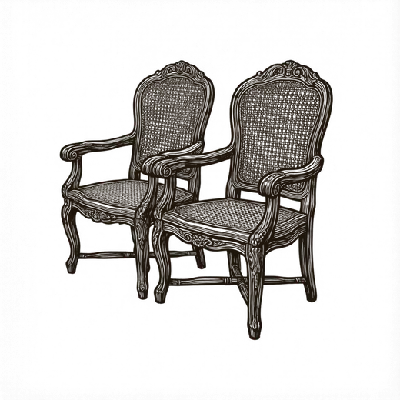
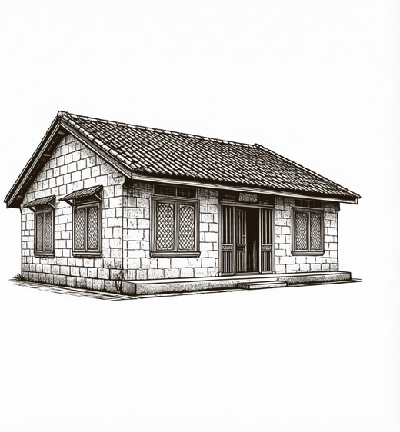
Juan grew up in the bahay na bato on Calle de la Virgen, the principal Evangelista residence in Candaba. The household was staffed with criadas and lavanderas, furnished with heirlooms, and filled with the music and hospitality expected of the Principalia. When their mother died in 1883, sixteen-year-old Emiliano became a second parent to the younger children. After Capitan Tiago’s sudden death in 1895, Emiliano became the legal guardian of Juan, Quintin, and Graciana, the three youngest siblings who had not yet reached adulthood.
The world Juan knew as a child was still governed by Spanish colonial custom. His father served as Gobernadorcillo, processing to Mass with the town officials, wearing frock coat and barong tagalog, and acting as the town’s informal banker. Juan would have absorbed from an early age the expectation that an Evangelista man served the town, managed land, and maintained the family’s standing.
Capitan Tiago died without a will in March 1895. At the time of his death, the declared estate was undervalued at P87,773, reflecting purchase prices rather than current market value and excluding assets already in the hands of adult children. On July 8, 1895, the adult children and Doña Pilar, acting for her minor children, signed a partition agreement that was notarized on October 23. The settlement was remarkably amicable by the standards of wealthy families.
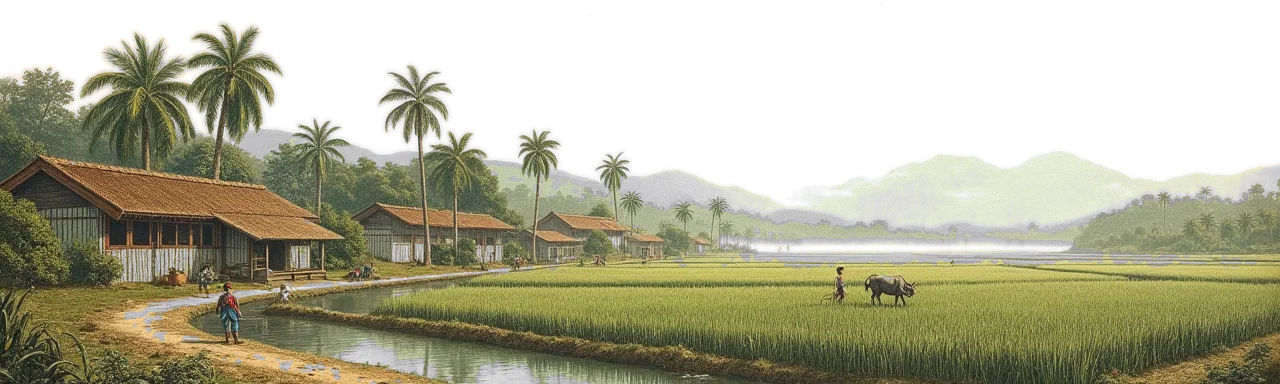
Don Juan’s share was specific and substantial. He received the six-hundred-square-meter building on Calle de Municipio that Don Santiago had purchased in May 1890, together with several properties in Barrio Salapungan. The Calle de Municipio building gave him a presence in the town center, while the Salapungan lands tied him to the agricultural base of the family fortune—rice fields, fishponds, and the tenant relationships that defined Candaba’s economy.
The partition distributed Candaba property across all of Capitan Tiago’s children. Emiliano inherited the mansion on Calle de la Virgen; Ygnacia and Pedro received their shares; Ambrocio and Luisa took buildings and lands; Quintin received properties in Salapungan including a fishpond; Graciana received a commercial lot on Calle de Urdaneta and a debt owed by Don Quinterio Cabigting. Each child’s inheritance reflected both need and the father’s earlier land purchases.
Juan’s inheritance placed him among the landed siblings who stayed close to Candaba. While some of his half-siblings and step-siblings later moved to Manila or abroad, the records suggest that Juan remained rooted in the town, managing the properties he had received and living among the tenant farmers and church festivals that shaped Evangelista identity.
The family tree records that Don Juan married twice. His first wife was Milagros Cardenas Reyes y Soriano; his second wife was Maria Carmen Arroyo. These marriages connected him to other old Candaba families—the Reyes and Arroyo lines that appear throughout the Evangelista kinship network. The tree does not list children for Juan in the available record, and the book offers no detailed account of his households.
In a clan where marriage often extended political and economic alliances, Juan’s unions would have reinforced his place within Candaba’s intermarried elite. The absence of further detail in the book leaves room for future research in parish registers and family papers, but his marriages themselves mark him as a man fully embedded in the town’s social fabric.
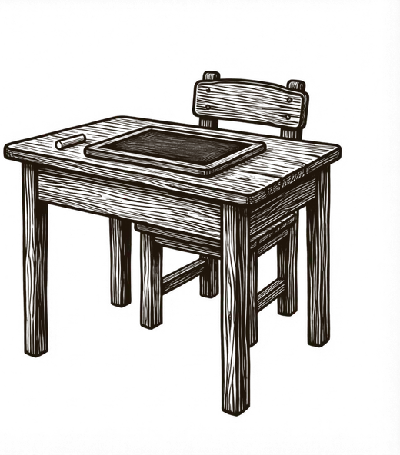
Juan lived through the great transition of the early twentieth century. The Spanish-American War ended the Principalia’s formal political monopoly, and American rule brought public schools, new roads, and eventually land reform pressures. The sons of Don Santiago continued to run their haciendas, and together with their stepmother Doña Pilar and her children they collectively controlled the largest palay harvest in Candaba. Yet the landlord-tenant relationship grew more fragile, and agrarian reforms would, over decades, affect even the great Evangelista estates.
For a landowner like Juan, these changes would have meant adjustments in how rice fields, fishponds, and town properties were managed. The book notes that gambling, modern ideas, and the rise of the Huks later eroded many Kapampangan landed families, but it does not record Juan’s particular experiences of this long transition.
Unlike several of his siblings, who moved to Manila or abroad as adults, Don Juan remained in Candaba. He died there in 1952, buried in the town where his father had once been the richest man and highest official. The book does not record his civic offices or business dealings, but his continued residence in Candaba suggests that he managed his inherited properties and lived among the rhythms of the town that had shaped the Evangelista identity for generations.
His life is one of the less documented threads in Capitan Tiago’s large family. What is certain is his parentage, his birth in Candaba in 1879, his share of the 1895 estate, his two marriages, and his death in Candaba in 1952. These facts place him firmly within the second generation of Evangelistas who inherited the wealth and obligations of the Principalia during the transition from Spanish to American rule, a generation whose quieter members are remembered chiefly through land titles, family trees, and the continuing lines they left behind.