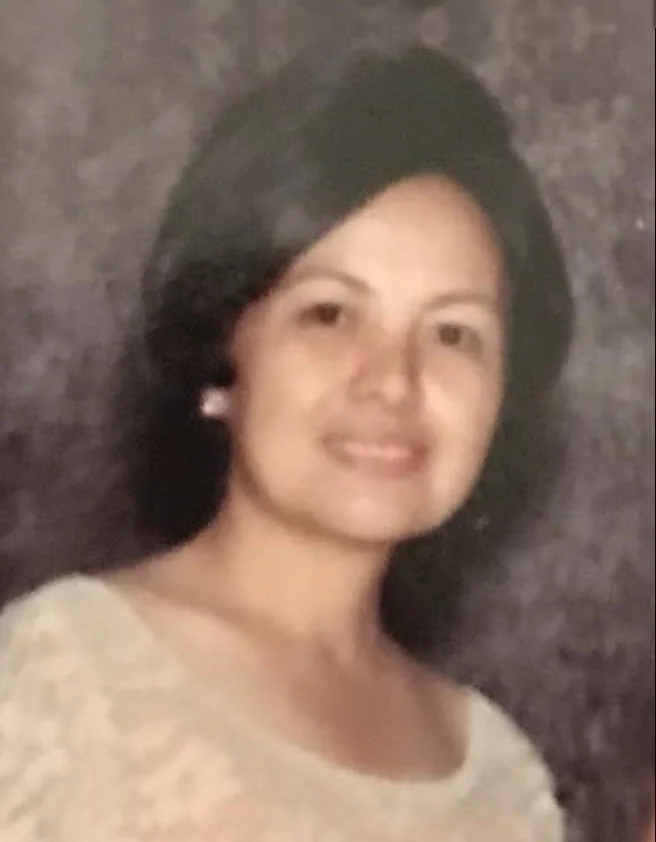
Leonor Evangelista-Jacinto
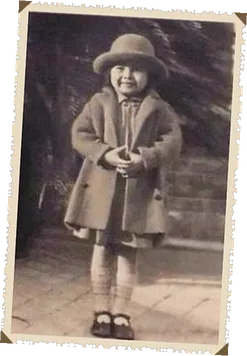
Leonor “Nonong” Evangelista y Lacanilao was born on July 1, 1924, the daughter of Dr. Honorio Canciller Evangelista y Salunga and Carmen Lacanilao of Baliuag, Bulacan. Her early childhood was spent in Shanghai, where her father, the only veterinarian in that city in the early 1930s, cared for the horses of the international elite. She attended a private British school, acquired a British accent, and became an accomplished pianist, singer, and equestrienne before war forced her family back to the Philippines. She married Atty. Emmanuel Tinawin Jacinto on March 25, 1944, raised eleven children, and kept alive the Evangelista artistic and devotional traditions until her death in Federal Way, Washington, in 2017.
Leonor’s father, Dr. Honorio Canciller Evangelista, was the youngest surviving child of Don Santiago “Capitan Tiago” Canciller Evangelista and Doña Maria Pilar Salunga y Dantis. After veterinary studies in Manila and postgraduate work in San Francisco, he married an American, Pauline Kearns, in 1917; their daughter Peace was born the following year. That marriage ended in divorce in 1926. By then, Dr. Honorio had moved to Shanghai with his second wife, Carmen Lacanilao, who had a daughter, Asunción, from her first marriage to Dr. Federico A. Castro. Dr. Honorio adopted Asunción and raised her as his own.
Leonor’s birth in 1924 united the Evangelista-Salunga line with the Lacanilao family of Baliuag, Bulacan. The family lived in one of the most affluent areas of Shanghai, on Hart Road off Bubbling Well Road in the International Settlement, surrounded by British and American neighbors. From birth, Leonor moved in a world of privilege, protocol, and multilingual cosmopolitanism very different from the Candaba of her grandparents.
In Shanghai, Leonor and her sister Asunción lived a life that few Filipino children of their generation could imagine. They attended a private British school, acquired British accents, and made friends among the children of the city’s elite. Leonor took riding lessons and became an accomplished equestrienne, and she was encouraged in the arts, becoming an excellent pianist and singer in the tradition of Evangelista women. For the young Leonor, it was truly an idyllic childhood.
The family’s life was cosmopolitan and secure until the late 1930s, when war began to shadow the International Settlement. In 1937, as hostilities between China and Japan reached their height, Carmen Lacanilao-Evangelista fled with her two daughters to the safety of the Philippines, leaving Dr. Honorio behind to serve in the Shanghai Volunteers Corps and later to endure arrest, torture, and imprisonment by the Japanese occupation forces.
Despite the distance between Shanghai and Candaba, Leonor remained connected to her Evangelista roots through her grandmother, Doña Maria Pilar Salunga y Dantis. Doña Pilar doted on the fair-skinned, Caucasian-looking little girl who spoke with a British accent and charmed everyone she met. Leonor remembered her grandmother as a very strict but adoring woman who left her a lifetime of happy childhood memories.
This bond with Doña Pilar was part of a larger Evangelista inheritance. Leonor’s aunts and cousins on the Santos side also carried the same aristocratic bearing that Doña Pilar had bequeathed to the family, and Leonor herself would later be described as possessing the legendary Evangelista aristocratic bearing, passed down through the women of the clan. The author of the book notes that the same strong lower lip and face shape seen in Doña Pilar’s portrait also appeared in Leonor’s mother and aunts, as if the genes were as strong as the personality.
On March 25, 1944, Leonor married Atty. Emmanuel Tinawin Jacinto. The marriage produced eleven children: Honorio, named after her father and later known as Norrie Jacinto, “The Neil Sedaka of the Philippines”; Emmanuel, Jr.; Emylene; Deborah; Leonor; Gervacio; Beverly; Bernadette; Carmela; Veronica; and Regina. The Jacinto household was a lively musical and singing family, with children who played piano, guitar, and other instruments.
Leonor and Emmanuel settled in Quezon City, where they raised their large family. Her sister Asunción married Mayor Anastacio Gallardo of Candaba and lived in the ancestral house on Buas Street, while Leonor’s own children spent their summers there with their cousins, growing up under the watchful presence of the family’s Mater Dolorosa statue. The two sisters, though living in different cities, shared responsibility for the ancestral house and its traditions.
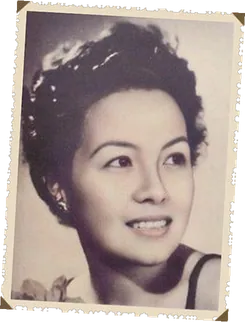
Leonor possessed the artistic talents that had long marked Evangelista women. She was an excellent pianist and singer, and she had a successful run on the Philippine stage, starring as Ensign Nellie Forbush in the musical South Pacific. More importantly, she was a devout Catholic, and her deep prayer life, love, and faith in God sustained her through the years.
She passed both her artistic gifts and her religious devotion to her children. Her daughters Emylene E. Jacinto-de Jesus and Deborah Evangelista Jacinto would later help preserve the family’s Candaba memories, contributing to the book that kept alive the stories of Mater Dolorosa, the ancestral house, and the Evangelista summers of their youth. In this way, Leonor became a bridge between the cosmopolitan Evangelista world of Shanghai and the rooted devotional world of Candaba.
For Leonor’s children, the ancestral house on Buas Street—now Gallardo Street—in Candaba was the setting of happiest memories. As soon as the school year ended at Assumption Convent in Herran, Malate, the Jacinto children traveled north to Candaba with their Lola Mameng, Carmen Lacanilao-Evangelista. They stopped in Malolos for pan de sal and fresh buko juice, knowing they would soon be reunited with aunts, uncles, cousins, and the larger Evangelista clan.
At the house, they picked star apples from the front yard with a sungkit, played games on the expansive lot, and learned the rituals of Holy Week. In the 1950s, Emylene and Deborah donned their first formal long gowns to participate as “Sinyuras” in Candaba’s Easter Salubong procession, wearing the same Assumption First Holy Communion gala gown that had been passed down through the generations. These traditions bound Leonor’s branch of the family to the Candaba of Capitan Tiago and Doña Pilar, and to the Mater Dolorosa that the family had guarded for more than a century.
In the early 1960s, Dr. Honorio was reunited with Leonor and her family in San Francisco; they all eventually immigrated to the United States in the late 1960s. Leonor lived a long life, surviving her father by nearly four decades. She passed away at her home in Federal Way, Washington, on May 23, 2017, forty days short of her ninety-third birthday. Her sister Asunción had died almost a year earlier, and the two sisters, close all their lives, did not long outlive each other.
As Leonor was being wheeled out into the funeral car, her children played Glenn Miller’s “Moonlight Serenade,” the theme song of their parents, whom they remembered dancing to this music every time they were growing up. It was, the book notes, “a very solemn and dignified farewell to their beloved mother, and youngest child of the singular and distinguished Dr. Honorio Canciller Evangelista.” Leonor herself had often said, “God is the architect. We are the draftsmen. We must trust in God. He takes care of everything. Once we understand what our role is, then and how we got here, everything falls into place.”