Doña María Natividad Canciller Evangelista y Salunga
Aclassically trained pianist, Doña María Natividad Canciller Evangelista y Salunga was the second daughter of Capitan Tiago (Don Santiago Canciller Evangelista) and Doña María Pilar Salunga y Dantis of Candaba. At fourteen she was painted in full Filipiniana—butterfly sleeves, terno train, and gold-coin jewelry—the very year she eloped with the surgeon Dr. Gualberto Santos y Zúñiga of Polo, Bulacán. Fearing her mother’s disapproval, the couple fled to Bulan, Sorsogon, where they settled in a grand bahay na bato whose ballroom could hold a hundred guests, and there they raised six children. She remained in Bulan until her death in 1934.
Doña María Natividad Canciller Evangelista y Salunga was born in Candaba, Pampanga, in 1889, the second daughter of Don Santiago Canciller Evangelista—Capitan Tiago—and his third wife, Doña María Pilar Salunga y Dantis. From her father’s earlier marriages she had half-siblings including Don Emiliano, Doña Ygnacia, Don Pedro, Don Ambrocio, Doña Luisa, Don Quintín, Don Juan, and Doña Graciana. From Doña Pilar she shared her childhood with Don Honorio, Don José, Doña Virginia, and Doña Rosario.
The Evangelista clan of Candaba was, by then, among the most powerful principalia families of the town, with estates stretching across barrios such as Pansinao, Santo Rosario, Mapaniqui, Ungut, and Salapungan. Natividad grew up in a household where land, politics, and piety were daily companions, and where the piano was cultivated as a feminine accomplishment essential to good breeding.
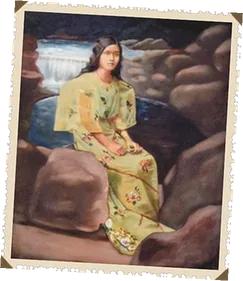
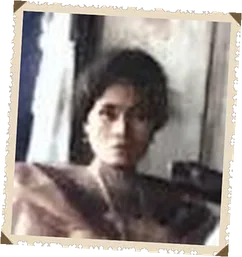
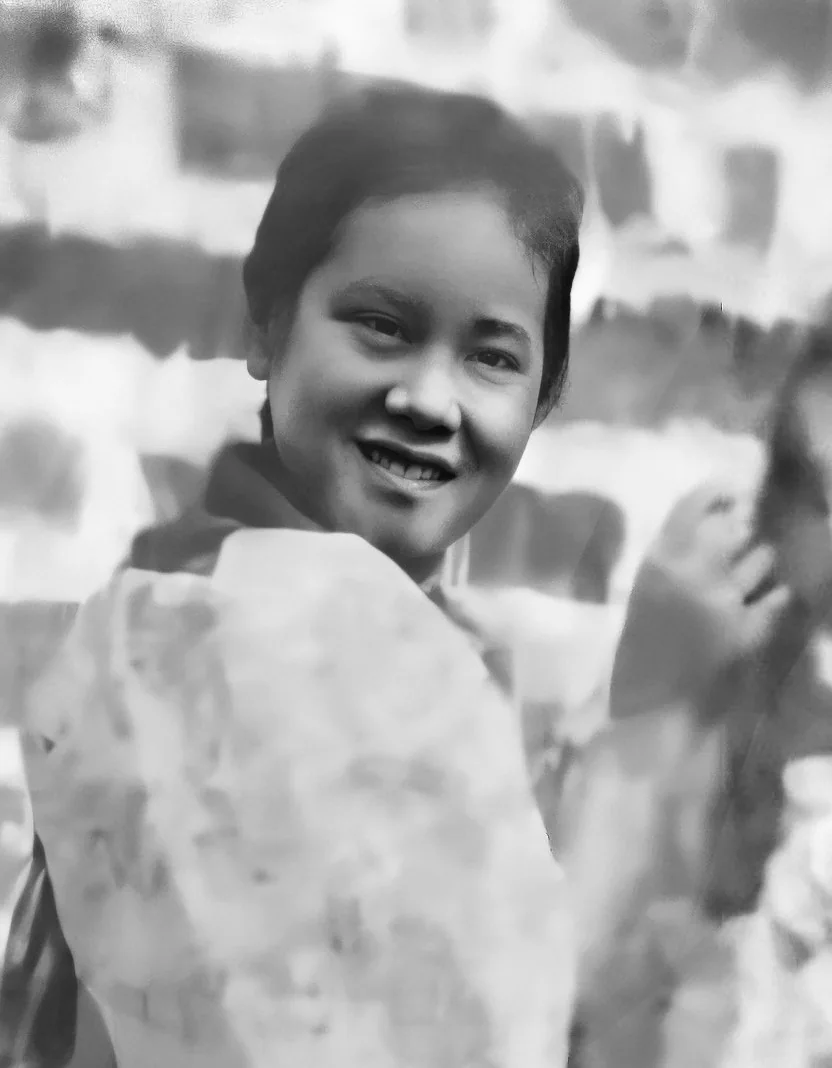
Doña Pilar fostered the arts in her children. Thanks to her, the piano became an enduring part of the lives of many descendants, and Natividad was classically trained. Around 1903–1904, when she was fourteen, she sat for a studio portrait that was later hand-colored in tempera and gouache. In it she wears a beautiful green floral Filipiniana top with butterfly sleeves and a matching terno train; an Isabel II Spanish-Philippine twenty-one-carat gold-coin pendant hangs at her neck, and a matching set of gold coins forms a bracelet on her left arm.
The portrait was commissioned at the same time as one of Doña Pilar, and the two paintings would become heirlooms of the Evangelista-Santos and Viray families. It was, in every detail, the likeness of a young woman prepared for the social world into which she had been born.
The man Natividad would marry was Dr. Gualberto Santos y Zuñiga, a Chinese mestizo born on July 11, 1876, in Polo, Bulacan. He was the son of Don Teodulo Santos and Doña Francisca Zuñiga y Roqueza, and a first cousin of Dr. Pio Valenzuela, one of the heroes of the Philippine Revolution; their mothers were half-sisters. Polo would later be renamed Valenzuela in honor of Dr. Valenzuela in 1960.
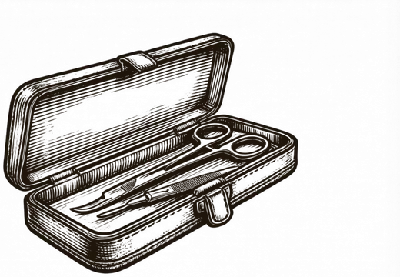
Dr. Santos was a surgeon and dentist who had studied at the University of Santo Tomas School of Medicine. He was twelve years older than Natividad and, by the time they met, was already established in his profession. He would later serve on the faculty of UST’s School of Medicine around the same time that his brother-in-law, Don José Canciller Evangelista, was a student there.
Doña Natividad and Dr. Santos formed an attachment in a short time. They eloped in early 1904, not long after they met, and made their way south to Bulan, Sorsogon, where they settled and raised a family. According to their daughter Placer, Dr. Santos altered the spelling of his middle name from Zuñiga to Suniga at that time.
By the time Doña Pilar joined the couple, they were already married and had two children: Placer, born September 25, 1906, and Josefina, born September 27, 1908. Doña Pilar would later welcome her eldest granddaughter into her own household, and the move set the Santos family on a Sorsogon course that would last for generations.
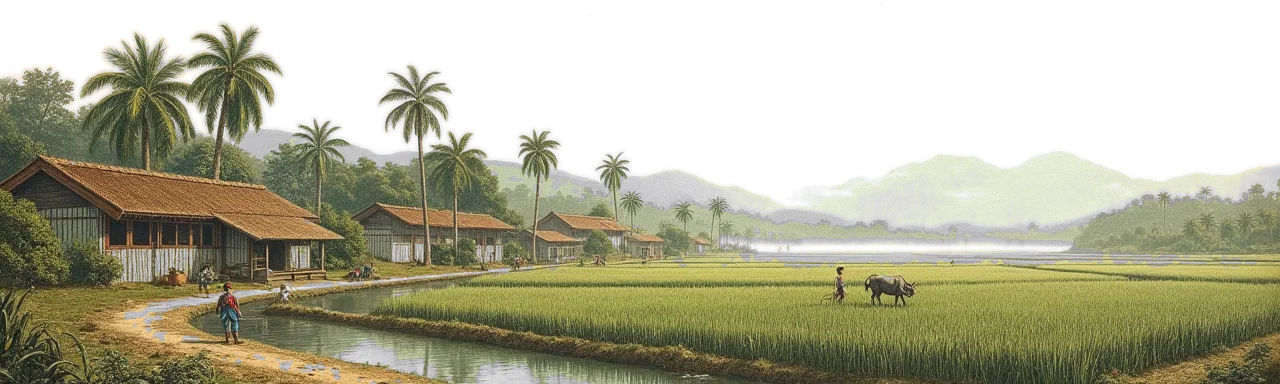
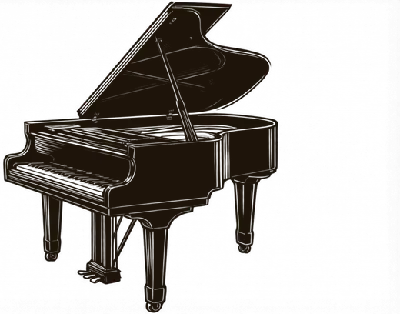
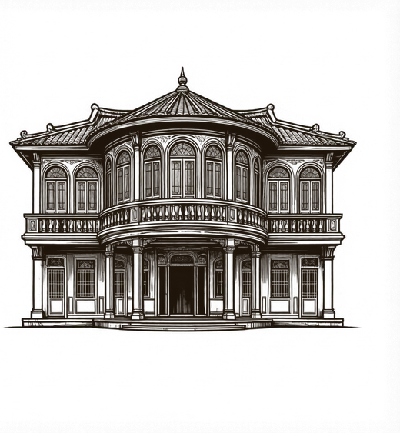
In Bulan the couple built a grand bahay na bato. Dr. Santos’ nephew, the Filipino surveyor Don Timoteo Certeza, described it in his autobiography as “a big two-story semi-concrete structure with a balcony and a ballroom that could hold a hundred people.” A piano stood in the spacious sala, and there Doña Natividad and her guests would play classical music and sing.
The house became a center of provincial society. Don Timoteo himself met and courted his future wife Concepción there, and he never forgot the favor. Even in old age he sent Christmas cards every year to his cousins Placer, Josefina, Leticia, Adelaida, and Adelaida’s daughter Angela Myrna. Dr. Santos established his medical practice in Bulan and became one of the leading physicians of Sorsogon.
Doña Natividad and Dr. Santos had six children: Placer, Josefina, Amado, Cesar, Adelaida, and the much younger Leticia.
The surviving children were born across the first three decades of the marriage: Amado, called Lolo Amading, in 1909; Cesar, called Lolo Sonny or Papaani, on March 4, 1910; and Adelaida Leticia, called Lola Dely, on February 11, 1911. Leticia, called Lola Nene, was born on March 28, 1926, when her mother was already in failing health.
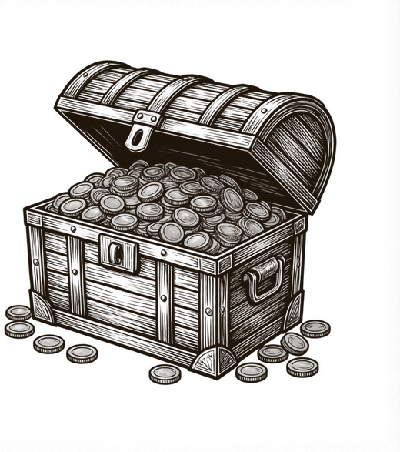
Doña Pilar’s wealth was not confined to land. She was in possession of a large chest full of Philippine Spanish Isabel twenty-one-carat gold coins, as confirmed by her favorite grandchild, Placer Evangelista Santos. This treasure was not included in the estate settlement of 1895, in which Don Santiago’s declared properties were valued conservatively at 877,773 pesos. A single four-peso Isabel gold coin is worth about forty thousand pesos today, and Doña Pilar had a chest full of them.
The image of that chest—the glint of coin handed down invisibly from Capitan Tiago’s widow—remained one of the family’s enduring emblems of a fortune that was never fully reckoned.
Doña Natividad remained in Bulan until her death in 1934. Her passing was followed in the same year by that of Dr. Santos, leaving the surviving children—Placer, Josefina, Cesar, Adelaida, and the eight-year-old Leticia—orphaned. She was originally buried behind Bulan Church and later reinterred at Himlayang Pilipino in Tandang Sora, Quezon City, alongside her husband and several of her children.
The portrait that showed her at fourteen in full Filipiniana passed from Placer to her granddaughter Angela Myrna Mansor-Viray, then to Vicky Viray-Mendoza, and finally to Anna Viray-Cruz, the family historian, archivist, and genealogist. It is now in line to be kept by Chloe Viray, born in 2007. Thus the image of Doña Natividad continues its journey through the generations, as carefully preserved as the memory of the woman it depicts.