María Pilar Salunga y Dantis
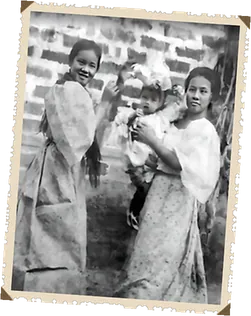
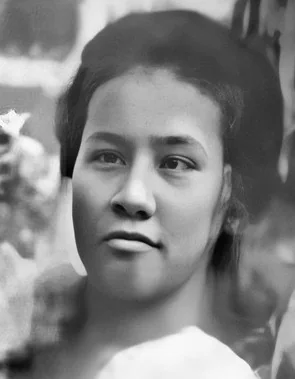
Some are born with a strong sense of self. Doña María Pilar Salunga y Dantis — considered the most beautiful woman in all of Candaba during her lifetime — possessed that inner strength and character to a rare degree, and was remembered by those who knew her as a force of nature. Decades after her death in 1931, her descendants still felt their matriarch's presence and influence, and regarded her with fascination and deep respect.
María Pilar Salunga was born in Candaba, Pampanga, on August 12, 1866, the daughter of Andrés Salunga y Magtalas and Silvina Dantis y Samonte. She was baptized at the Candaba Church four days later, with the Augustinian friar Fr. Vicente Ferrer officiating and Marie Sadie of the landowning class standing as her godmother.
She was one of eleven children; her siblings were Felipe, Mariano, Felipa, Teodora, Luis, Juan, Aniceto, Genaro, Isidora, and Juana Salunga y Dantis. Though their parents were tenants of the Evangelista family, the Salungas lived under its patronage in Candaba, and there Pilar grew up and blossomed into a celebrated beauty.
The Salungas belonged to the Super Principalia as descendants of Lakan Dula, the last King of Tondo, on the Salunga side of the family. Salunga is an ancient Kapampangan surname, one of the native-sounding names that Lakan Dula's descendants adopted to conceal their identities when persecution drove them into exile — many of them in Candaba, where the family put down new roots.
The old church books carry the line: Doña Pilar's paternal grandparents were Tomás Renovator Salunga, born in 1782, and Mamerta Magtalas; her great-grandparents were Raphael Salunga and Cathalina Candelaria Maladati of one of Candaba's old established families; and her great-great-grandfather was Don Joseph Bondoc Lacandola of Pasig, a descendant of Don Carlos Lacandola, the Christian name of Lakan Dula himself. The family claim, passed down through the generations, was finally proven in 2022 by genealogist Todd Lucero Sales of The Filipino Genealogy Project, working from the Candaba Church records.
Don Santiago Canciller Evangelista — Capitan Tiago, twice widowed and twenty years her senior — had known the Salunga family for years and had watched Pilar grow up. So beautiful was she that he married her on November 8, 1886, in Candaba, without her parents having to provide the customary wedding dowry. She was twenty years old, around the same age as his eldest son, Don Emiliano.
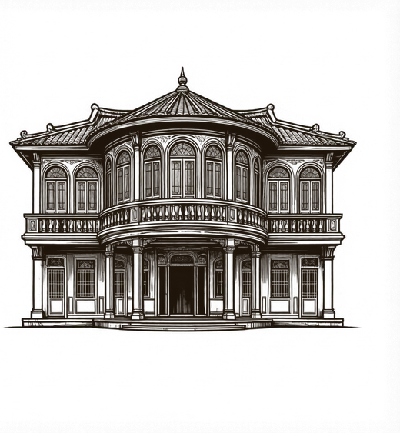
Capitan Tiago spoiled his young wife throughout their marriage, and after the wedding Pilar moved into his large house on Calle de la Virgen, assuming the title of Doña as the new lady of the manor.
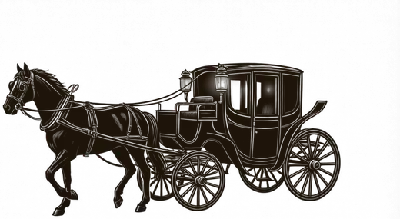
As the mistress of one of Candaba's great houses, Doña Pilar surrounded herself with beautiful things. She wore the finest dresses, and Capitan Tiago indulged her love of jewelry — particularly diamonds. She kept her own grand carruaje, a horse-drawn carriage, and a large household staff attended to her every need.
The couple had six children together: Doña Maria Rosario, Doña Maria Natividad, Doña Maria Adelaida, Don Honorio, Don José, and Doña Virginia Canciller Evangelista y Salunga.
Doña Maria Adelaida, born on September 17, 1890, died in infancy on August 3, 1891, and the marriage lasted only nine years: Capitan Tiago died suddenly on March 10, 1895, leaving Doña Pilar a young widow with five minor children. The partition settlement of his estate, signed that October by Doña Pilar and her stepchildren, was accounted among the quickest and most amicable of its kind; the properties the couple had acquired together were valued conservatively at 46,234 pesos.
Like their mother, her five surviving children were known for their mestizo good looks — black wavy hair, high cheekbones, and the distinctive soulful Evangelista eyes. Doña Pilar was a strict and imperious mother with a sharp mind and a sharp tongue to match it; her children were looked after by a large retinue of servants and were often seen being driven around Candaba in their mother's grand carriage.
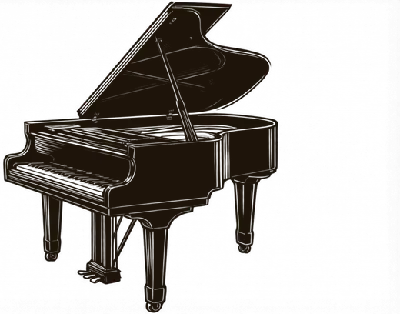
Doña Pilar fostered arts and education in her home. Like most Principalia families, the grand Evangelista house had a piano, and at least two of her daughters, Doña Rosario and Doña Natividad, became accomplished pianists who played and sang beautifully for their mother and her guests — the accomplishments expected of well-bred young ladies of the nineteenth century. Thanks to Doña Pilar, the piano became an important part of the lives of many of her descendants, who still play the instrument today.
Her two sons became doctors: Don Honorio a veterinary surgeon and Don José a physician. And like many Kapampangan women, Doña Pilar must have been an excellent cook, a reputation her daughters and granddaughters carried through many generations of Evangelista women.
One by one her children married. Fourteen-year-old Doña Rosario married an American officer, Martin Olson, and in 1904 her sister Doña Natividad, also fourteen, married Dr. Gualberto Santos y Zúñiga of Polo, Bulacan; the couple made their home in Bulan, Sorsogon, and in time Dr. Santos proved one of Doña Pilar's great allies in family matters. Doña Virginia married Jose David y Tiangco and settled in San Fernando, Pampanga.
Don Honorio left for San Francisco in 1913 to pursue his doctorate at the San Francisco Veterinary College, and in 1917 he brought his American bride, Pauline Kearns, home to Candaba to meet his mother. Don José studied medicine at the University of Santo Tomás in Manila, the oldest university in Asia.
Doña Pilar missed her daughter Natividad, so far away in Sorsogon, and in 1917 eleven-year-old Placer, the eldest grandchild, was sent to live with her grandmother in Candaba. At their first meeting the grandmother looked the girl up and down for what seemed an eternity, then, apparently pleased with what she saw, gave her a pair of diamond earrings that Placer treasured all her life.
At fourteen Placer was enrolled as a boarder at the Colegio de la Inmaculada Concepción de la Concordia in Paco, Manila. On weekends she was fetched by a chauffeur-driven Packard or Cadillac, and Doña Pilar took her shopping at the Aguinaldo Department Store, one of the poshest in Manila. Summers and Christmases were spent at her grandmother's country house outside the town proper — a sprawling bungalow with a tiled roof on reclaimed land overlooking fishponds — where Placer learned to run a household, to entertain guests, and the good manners that turned a girl into a proper lady.
Doña Pilar was famed for her savoir faire as a hostess, and a departing guest could expect a souvenir drawn from her large chest of Spanish-Philippine gold coins — a Queen Isabella II gold coin, some of which her descendants keep to this day.
Her granddaughters remembered her all their lives: Leticia and her sisters spoke of her with great love, respect, gratitude and admiration, and were proud to call her grandmother; through her son Honorio's daughter Leonor she was a strict but adoring grandmother who left a lifetime of happy childhood memories.
Doña María Pilar Salunga y Dantis died of pulmonary tuberculosis on November 16, 1931, in Santa Mesa, Manila, at the age of sixty-five. Her body was brought home to Candaba, where a funeral Mass was held at the Candaba Church, and she was laid to rest in the small cemetery on the church grounds where members of the Principalia were buried, beside her first husband, Don Santiago.
About seventy years later, when her grave was opened so her remains could be moved to a niche, her body was found intact — and the grand lady was given a new coffin and reburied in the same spot, as if even in death she refused to be moved from her place of prominence. The feisty Belle of Candaba — loved, respected and feared in her lifetime, known for her lavish lifestyle and gracious hospitality, a lover of all things beautiful — had lived a full and colorful life, and was larger than life.