Placer Santos y Evangelista
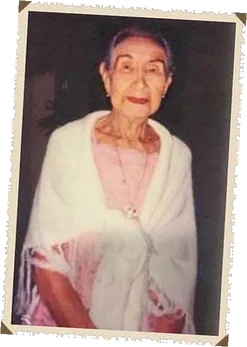
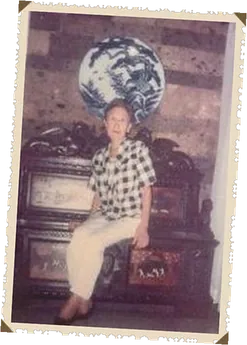
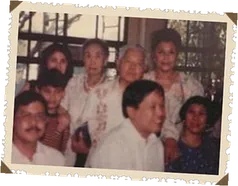
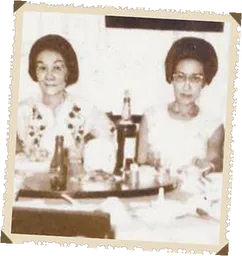
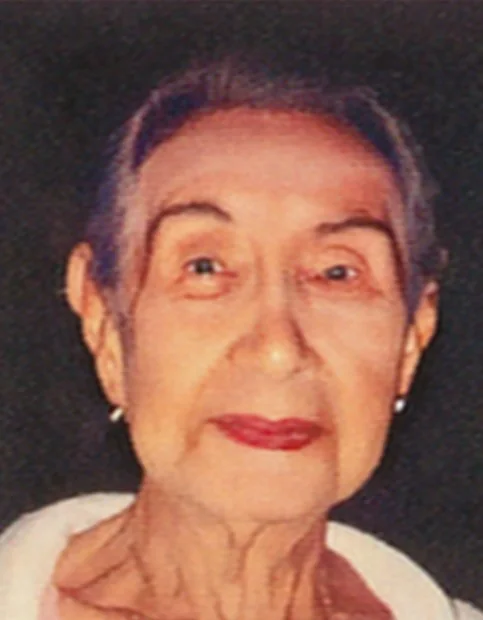
Doña Pilar’s closest grandchild, she was born Placer Santos y Evangelista in Bulan, Sorsogon, the eldest daughter of Doña Natividad Canciller Evangelista and Dr. Gualberto Santos. In 1917, at the age of eleven, she was sent from Bulan to live with her grandmother Doña Pilar in Candaba, and there she attended the exclusive Colegio de la Inmaculada Concepción de la Concordia in Paco, Manila. She was fetched on weekends by a chauffeur-driven Packard or Cadillac, and Doña Pilar took her shopping at the Aguinaldo Department Store. When she was fourteen her father recalled her to Bulan to nurse her ailing mother. Known ever after as Lola Baba, she never married, raised her youngest sister Leticia, and kept her mother’s portrait for seventy years. She died in 2004 at the age of ninety-seven.
Placer Santos y Evangelista was born on September 25, 1906, in Bulan, Sorsogon, the eldest surviving daughter of Dr. Gualberto Santos and Doña Natividad Canciller Evangelista. She was preceded by an infant sister, Maria, who had been born in September 1905 but died before she could be raised. By the time the household had settled into the rhythms of provincial life, Placer was joined by Josefina, Amado, Cesar, Adelaida, and the much younger Leticia. The family dwelt in a grand bahay na bato whose ballroom could receive a hundred guests, and it was there, amid the music of her mother’s piano, that Placer first knew the comforts and expectations of the Evangelista-Santos line.
Her parents’ union had begun in early 1904 with an elopement, and by the time Doña Pilar discovered them they were already married with two small children. The household that Placer entered was therefore one shaped by both romance and discretion: her father, a Chinese mestizo surgeon from Polo, had even altered the spelling of his middle name from Zuñiga to Suniga in the hope of delaying her grandmother’s search. Such details would later be recalled by Placer herself, who became the family’s living archive for the Bulan years.
In 1917, when Placer was eleven years old, Doña Natividad sent her eldest child north to Candaba to live with her grandmother Doña María Pilar Salunga y Dantis. The distance between Bulan and Candaba was considerable, and Placer arrived with the shyness natural to a girl meeting the matriarch of the Evangelista clan. Doña Pilar, it is remembered, looked her up and down for what seemed an eternity before, evidently pleased, bestowing upon her a pair of diamond earrings that Placer would treasure all her life.
Placer’s parents did not accompany her. Doña Natividad’s poor health kept the couple in Sorsogon, and because of this they were never able to build a Candaba or Manila residence comparable to their Bulan mansion. That absence made Placer’s sojourn with Doña Pilar all the more formative: she became, in effect, the envoy of the Santos branch to the Evangelista stronghold.
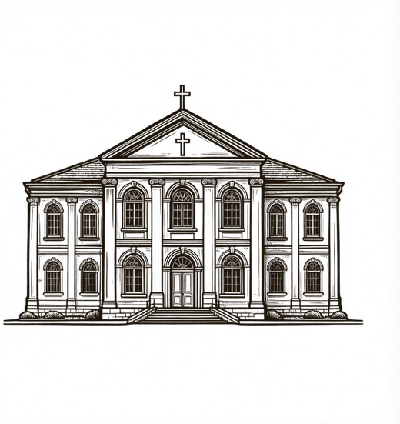
At the age of fourteen, Doña Pilar sent Placer to the exclusive Colegio de la Inmaculada Concepción de la Concordia in Paco, Manila. There she studied for two years as an interna, a boarder within the convent’s discipline, while weekends brought her back to Candaba by chauffeur-driven Packard or Cadillac. Doña Pilar herself took her shopping at the Aguinaldo Department Store on Juan Luna Street, one of the most fashionable emporia in the capital, which had opened its New York buying office by 1925.
Placer’s education was cut short when her father recalled her to Bulan to nurse her ailing mother. Her sister Leticia later observed that, had Doña Natividad’s health permitted, Doña Pilar would have sent Placer on to a prestigious all-girls Catholic school in Hong Kong. Even so, the Concordia years left their mark: Placer returned to Bulan with the polish of Manila convent training and the poise of a young lady who had been measured against the capital’s standards.
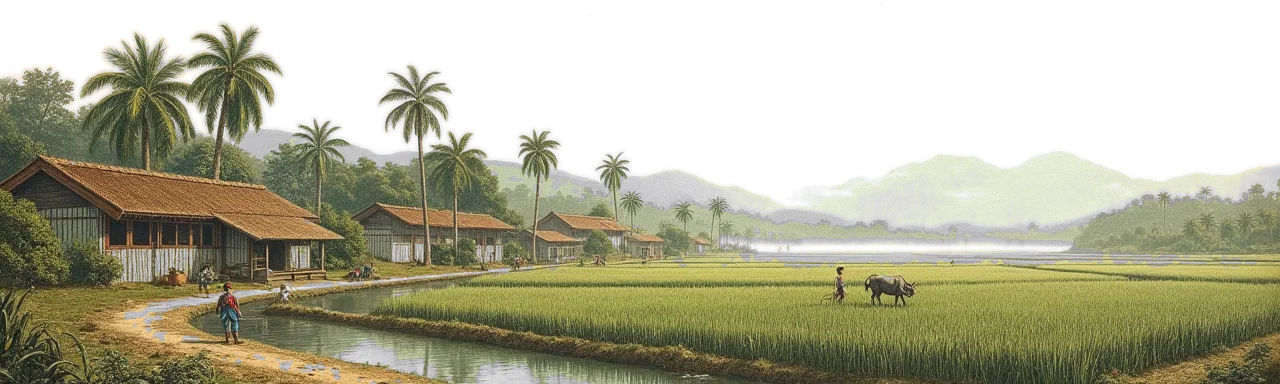
During Christmas vacations and summer breaks, Placer returned to Doña Pilar’s Candaba country house. She described it as a sprawling bungalow with a tiled roof, set on reclaimed land overlooking her grandmother’s fishponds. There, under Doña Pilar’s exacting eye, she learned how to run a household, receive guests, and observe the small proprieties that distinguished the Principalia. Doña Pilar was known for her savoir-faire as a hostess, and departing guests could expect to receive a Queen Isabella II Philippine gold coin from the large chest of Spanish twenty-one-carat coins that she kept—treasure that, Placer confirmed, had never been included in the estate settlement of 1895.
In 1990, Placer made a pilgrimage to Candaba with her sister Leticia and her grandniece Malou Viray y Mansor. They found the house still standing behind its concrete fence and iron gate, isolated from neighbors and surrounded by water. A painting of Doña Pilar adorned a wall, and a caretaker allowed them to look inside. The visit bound the three generations together in the very rooms where Placer had been trained.
With the deaths of her parents and her brother Amado, and the marriages of Cesar and Adelaida, only Placer, Josefina, and Leticia remained in the Bulan house. Placer had many eligible suitors, yet she chose not to marry. Instead, she dedicated her life to looking after her youngest sister Leticia, who had been left orphaned at the age of eight. In this choice Placer assumed the role that custom often assigned to the eldest daughter of a landed family: guardian of the hearth and keeper of the next generation.
She was known ever after as Lola Babu, a figure of memory and moderation in the scattered Evangelista-Santos household. Her days were shaped by the duties of the family portrait, the house in Bulan, and the stories she carried of Doña Pilar and Doña Natividad.
In her nineties Placer lived as long as she could for the sake of Leticia. She died on March 1, 2004, at the age of ninety-seven. After her death Leticia sold the family’s house in Manila and eventually returned to Bulan, where she lived on the family farm until 2010. Placer’s long custodianship of her mother’s portrait, her memories of Doña Pilar’s Candaba house, and her role as the unmarried eldest sister have made her one of the indispensable witnesses of the Evangelista-Santos branch.
She is remembered, too, through the descendants who continue the lines she helped preserve: her grandnephews and grandnieces, the great-grandchildren of Doña Natividad, and the family archivists who now hold the painting she once kept. In her unassuming way, Placer carried a generation across the twentieth century, from the last years of the Principalia to the scattered diaspora of the modern clan.