Santiago Evangelista II
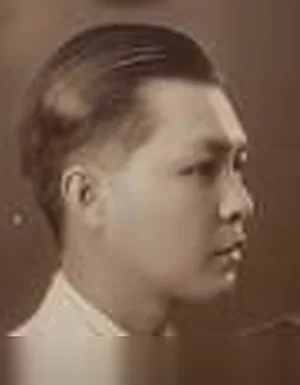
AProfessor of Pharmacy and the eldest son of hacendero Don Ambrocio Canciller Evangelista y Alonzo, Santiago was born on April 28, 1898, a grandson of the great Capitan Tiago. He married Maria Ocampo y Sazon on January 6, 1922 in Manila, and together they had seven children: Gloria, Leticia, Santiago, Cesar Justino, Aurora, Romero, and Fe.
Santiago's paternal grandfather was Don Santiago Canciller Evangelista, known as Capitan Tiago, a foundational figure in the Candaba branch of the family. The book refers to him as 'the great Capitan Tiago,' signaling the prestige that came with the name.
By naming his eldest son Santiago, Don Ambrocio continued the lineage and the naming tradition. The younger Santiago, called Santiago Evangelista II, thus bore a name that linked him both to his grandfather and to the head of the Candaba Evangelistas.
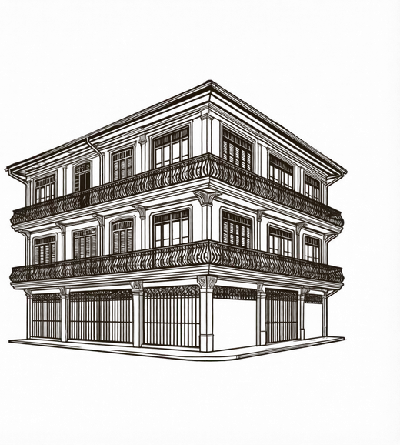
The household into which Santiago was born combined the old principalia standing of the Spanish era with the new opportunities of the American colonial period. The Evangelista ancestral house on Evangelista Street was part of a row of mansions built by Don Santiago Canciller Evangelista's children, making the street itself a family domain.
Felipe Santiago Gumabon Evangelista, known as Santiago Evangelista II, was born on April 28, 1898, in Candaba, Pampanga. He was the eldest son of hacendero Don Ambrocio Canciller Evangelista y Alonzo and Doña Juanaria Gumabon y Guevarra, and a grandson of the great Capitan Tiago, Don Santiago Canciller Evangelista.
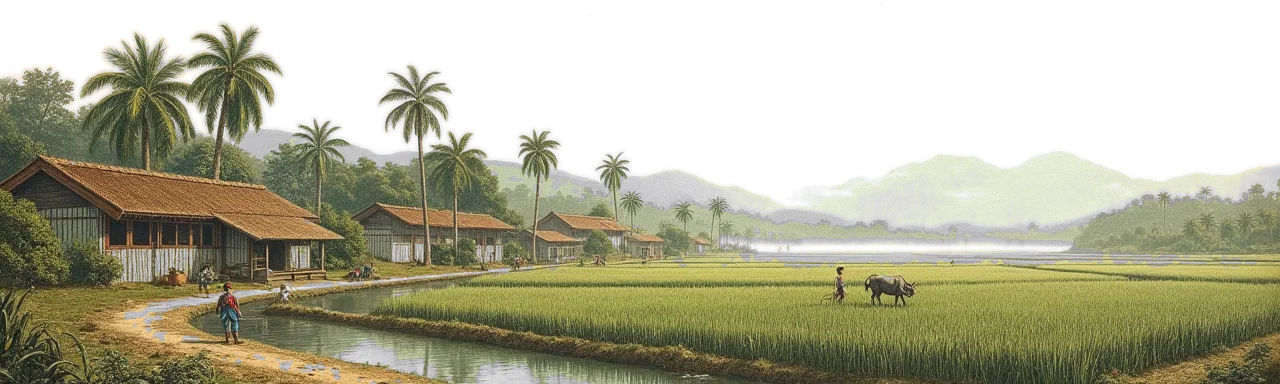
Don Ambrocio, a fifth-generation hacendero, had inherited large agricultural lands and fisheries in Salapungan in 1895 and built one of the largest bahay na bato houses in Candaba on what became Evangelista Street. Santiago thus grew up in a household defined by land, lineage, and public prominence. The family tree lists his birth year as 1895, but the book gives the specific date of April 28, 1898, and the present account follows the book.
Santiago's sister Adela married Dr. Esteban Arroyo, and their children included future Monsignor Benedicto Arroyo y Evangelista. His sister Pacifica became a teacher, and his sister Ester was remembered for her great beauty. The range of careers and life choices among the siblings shows the breadth of paths open to the children of Don Ambrocio.
Santiago's siblings numbered eleven: Adela, Maria Florencia, Ester, Alfredo, Maria Soledad, Maria Asuncion, Tomas, Bernardita, Bienvenido Restituto, Pacifica, and Margarita. Adela married Dr. Esteban Arroyo and became the mother of twelve children, including Msgr. Benedicto Arroyo y Evangelista. Ester and Pacifica, along with several sisters, remained unmarried after their father told them they had no need of husbands.
Tomas, born in 1902, would become a pharmacist and founder of the Laboratorio de Evangelista on Camiguin; Bienvenido, born in 1910, would become a dentist on Bohol. Santiago, as the eldest son, was the first to carry the family name into a profession and into marriage.
All of Don Ambrocio's sons were well-educated. Santiago and his younger brother Tomas both studied Pharmacy, while the youngest, Bienvenido, studied Dentistry at the Philippine Dental College in Manila. The book describes Santiago as highly intelligent.
He became a Professor of Pharmacy, the only one of the three brothers to hold an academic title. His profession linked him to the same field that would later draw Tomas to Camiguin and the Laboratorio de Evangelista, and it reflected the family's emphasis on advanced education during the American era. The book does not name the institution where he taught.
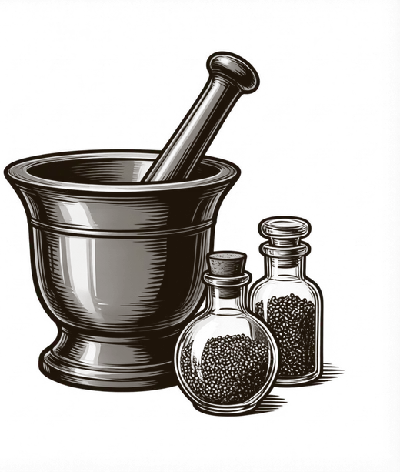
Pharmacy in the early twentieth century required both chemical training and commercial acumen. A professor of pharmacy would have taught the preparation of medicines, the standards of dosage, and the management of a drugstore or laboratory. Santiago's title suggests he did not merely practice pharmacy but trained others in it, placing him at the educational center of the profession.
Santiago's choice of pharmacy belonged to a generation of Evangelistas who pursued professional degrees in Manila. The American colonial regime had expanded higher education and standardized licensure in medicine, pharmacy, and dentistry. For a hacendero's son, a professorship in pharmacy was both a respectable career and a way to extend the family's influence beyond landholding.
The book notes that all three Ambrocio sons were well-educated, a pattern visible elsewhere in the clan: Don José Limjoco Evangelista studied medicine, and Don Honorio Canciller Evangelista also pursued advanced studies. Santiago therefore stood in a long Evangelista tradition of sending sons to Manila for professional training.
On January 6, 1922, in Manila, Santiago married Maria Ocampo y Sazón, who was born in 1902 and died in 1954. The marriage placed the eldest son of the Candaba hacendero in the capital, a common pattern for educated children of the provincial elite.
The couple had seven children: Gloria, born in 1922 and died in 1987; Leticia, born in 1927; Santiago, born in 1928 and died in 1985; Cesar Justino, born in 1929; Aurora, born in 1931 and died in 1995; Romero; and Fe. These names carried the Evangelista line into a new generation, combining Manila residence with Candaba ancestry.
The marriage in Manila on January 6, 1922, followed by the birth of Gloria in the same year, indicates that Santiago had already established himself in the capital before the wedding. Maria Ocampo y Sazon's family name connects to other Ocampo lines in the book, including Oceania Ocampo Gatbonton, though the text does not spell out any kinship between them.
Santiago, Tomas, and Bienvenido represented the three educated professions of their generation: pharmacy, pharmacy, and dentistry. Their father Don Ambrocio had ensured that his sons received advanced training, a continuation of the Evangelista investment in education that stretched back to Manila colleges and, in earlier generations, to the University of Santo Tomas.
While Tomas took his pharmacy training south to Mindanao and Bienvenido built a dental practice on Bohol, Santiago remained associated with the academic profession. His life illustrates the way the Candaba elite distributed itself across teaching, commerce, and the learned professions during the early twentieth century.