
The Richest Man in Candaba
Few men leave such a mark that they are remembered more than a hundred years after their death. In the Evangelista Clan, Don Santiago Canciller Evangelista, known in family lore as Capitan Tiago, is still highly revered today as he was before his death in 1895. He is the esteemed patriarch of the Evangelistas of Candaba. A man who achieved so much in his short life.
The son of Don Rosalino Canciller Evangelista y de Santa Cruz of Candaba, and Doña Dorothea Tecson y Tongco of Malabon, Don Santiago was born on July 24,1846, in Candaba, Pampanga, and was baptized one day later with Severo de Jesus as his godfather. Though he grew up as the son of a haciendero and a member of the local aristocracy, Don Santiago was not content to just sit around and enjoy his family's fortune. He did not squander what he inherited. Instead, he built on it and became a very wealthy man in his own right. In fact, he was the richest man in Candaba in the mid to late 19th century. He and his brothers, Don Ambrosio (the elder), Don Adriano, and Don Gregorio Canciller Evangelist y Tecson, who were all born and raised in Candaba, were not only known for their intelligence but also for their strong work ethic, traits inherent in many of their descendants today. At the peak of the family's wealth, they owned entire barrios and managed them well. They were practical men with an innate sense of leadership. As the Evangelistas had been landowners in Candaba for over 100 years, running haciendas was in their blood. Capitan Tiago was known to ride around Candaba on one of the Evangelistas' fine horses. The Evangelista estate was so vast that he needed one to inspect various sites, and to meet with his tenants. According to his great-grandson Dr. Jose Evangelista y Limjoco, one could ride all day and still not reach the end of the Evangelista estate. The Evangelistas were the largest palay producers in Candaba for many years.
A painstaking reconstruction of Don Santiago's estate alone, based on family records which includes a copy of his 1895 estate settlement, revealed that his hacienda shortly before his death stretched from Mapanique eastwards to Salapungan, then north to the ancient settlement of Magumbali, all the way to Mandili. Other Evangelistas - his siblings, uncles, cousins owned the properties next to his. More than half his land were rice fields. His plantations cultivated other crops including sugar, watermelons. He invested in the fishing industry with some of his fincas rusticas in Salapungan devoted to raising canduli (salmon catfish). He owned fincas urbanas - houses and buildings - within the town proper. He dominated Candaba's economic life at one point functioning as the town's rural bank providing credit to tenant farmers, people in the rural communities, fellow hacienderos and members of the Principalia. He was an astute businessman who understood the importance of diversification and innovation. He was a man ahead of his time.
Don Santiago's first marriage to Doña Eusebia Sangco y Santos on October 3, 1863 when he was 17 years old was brief. She died on January 18, 1865, without producing an heir. On February 8, 1867, the 20-year-old widower Don Santiago fathered a son named Emiliano with Antonio Alonzo (or Alonso) y de la Cruz (b. June 12, 1847). She was only 19 years old when she gave birth to Don Emiliano. She came from a very old and noble Candaba clan. After Emiliano, came in quick succession Doña Ygnacia (1868), Don Pedro (1870), Don Ambrocio (1871), Don Antonino (1874, died in infancy), Doña Luisa (1876). Don Santiago finally married Antonia Alonzo on October 6, 1877 when he was 31 and the bride was 30 years old. She is described in court documents as a spinster. They had four more children together: Don Quintin (1877), Don Juan (1879), Doña Graciana (1880), and Don Atilano (1882, died in infancy) Canciller Evangelista y Alonzo. As a member of the Principalia, the noble ruling class, and landowners in their own right, civil records showed that all of Don Santiago's children were styled as Don or Doña from the moment of their birth.
The Gobernadorcillo
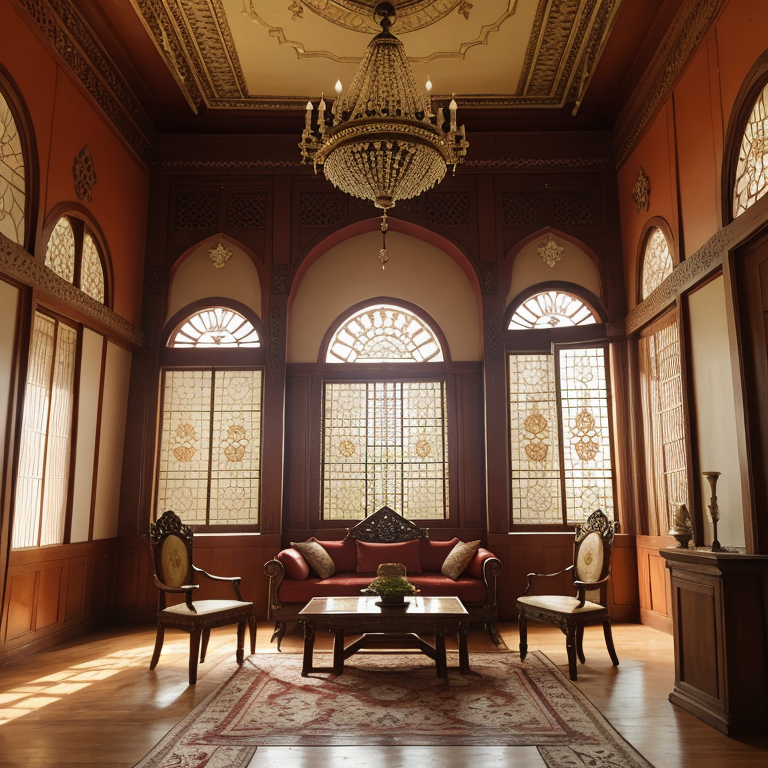
Based on notarized family civil records, Don Santiago, Doña Antonia, and their eight children lived in a stately home or bahay na bato on Calle de la Virgen in Candaba. Traditional Filipino houses for the elite in the 19th century were usually two-storeys high featuring capiz windows. Such houses were known not only for its form but for its function too. On the ground floor large wooden doors called entrada principal let carruajes (carriages) in as it was used partly as a horse stable, and as a parking space for the family's carroza and carruaje. There was a silong which was storage for farming supplies and produce. An escalera (grand staircase) led to the second floor entresuelo (mezzanine). Here in the entresuelo one could reach the oficina (home office) where the owner of the house conducted business transactions. In his oficina, Don Santiago met with staff and other Kapampangan business leaders. As the town's biggest money lender, it was a very busy office with a constant influx of people from all walks of life. There was a caida (receiving room),sala mayor (main living room), comedor (dining room), oratorio (prayer room), cuartos (bedrooms), cocina (kitchen), and azotea, an open-air balcony where one can see the aljibe, the water cistern, filled with rainwater or potable water.
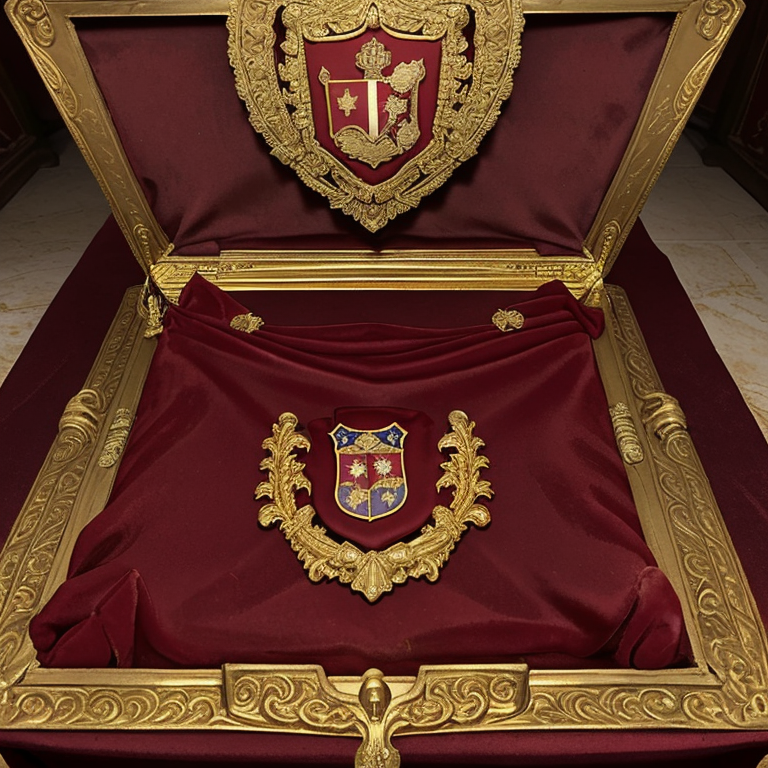
In the caida, the portraits of the lord and lady of the manor would have been displayed, along with the master's walking canes, the family's hats. In Don Santiago's home, the oratorio (the prayer room) where the family gathered together for night prayer was quite lavish. It showcased two large statues of the Blessed Virgin Mary with ivory faces, a large statue of the Most Holy Trinity enthroned in an urna (urn), a large Crucifix also enthroned in an urna embellished in silver. The statues of the Holy Mother of God had their own carro (or carroza) made of silver which cost a fortune. The carro, the two statues of Our Lady, including all her fine accessories were valued at P2,400 in 1895, a large sum considering a servant's salary was P3 a month. As was common in Evangelista households, Don Santiago would have hidden his cash in secret compartments beneath the family's altar table. After all, what better way to ward-off would-be robbers than to have the heavenly hosts literally watching over the family's money!
The sala mayor, where guests including the local priests were entertained, was the most important part of the house since it was used to show off the family's status in society. The interior decoration of the Evangelista house on Calle de la Virgen reflected a very refined taste. It contained a complete set of sillerias de Viena color negro or black Vienna chairs. The comidor was decorated with a matching set of twelve black Vienna caned chairs. These Vienna chairs were made by bending beech wood after steaming, and became a phenomenon in Europe in the mid 19th century. Vienna bentwood furniture was de riguer for a 19th century house belonging to the Philippine elite. It was one of the most enduring status symbols among the rich as with the family's piano. Several of Don Santiago's daughters were exceptional pianists who would have played during dances hosted by their parents at their bahay na bato on Calle de la Virgen.
Not one to rest on his laurels as a businessman and one of Candaba's leaders in the agriculture industry, Don Santiago threw his hat into the political arena. In 1881, at just age 34, he ran for the position of Gobernadorcillo, a biennial office which only a member of the Principalia could ever hope to assume. The office of Gobernadorcillo is the highest position a native could possess. According to Filipino writer/historian Louis Aldrin Lacson Bartolo, who is a descendant of Don Cristobal Lacson, the Gobernadorcillo of Angeles, Pampanga from 1843-1845, and is also known for his vlog Amlat Magaleño, to qualify for the position the candidate must be a native or Chinese mestizo, at least 25 years old, previously served as cabeza de barangay, able to read and write in Castilian, and has substantial properties such as lands, livestock, and sugar or rice mills. Above all, Lacson Bartolo said, to win the race for Gobernadorcillo, the candidate must get the support of the parish priest. The Alcalde Mayor and his directorcillo (secretary) came to the casa tribunal (municipal hall) to conduct the elections once a year. The election happened during the first harvest. Then, the alcalde will choose electors from twelve cabeza de barangay and they will choose the future Gobernadorcillo through ballot. However, the parish priest had a say in the process. If the parish priest gives his blessing to his chosen candidate, that candidate will emerge as the winner. After the elections, the Directorcillo counts the votes and he will write it on a terna. After the counting was over, the Directorcillo will announce the winner and a report will be forwarded to the electors and to the parish priest for attestation. Then, the Alcalde will forward the report to the Governor General. The newly elected Gobernadorcillo will make a courtesy call to the parish priest, and he will assume his duties as the highest chief of the town. Then, the Gobernadorcillo will assume the honorific title, Capitan. (Source: Amlat Magaleño)
From his election on April 11,1881 where he garnered 10 votes, to April 1883, Don Santiago or Capitan Tiago was the Gobernadorcillo of Candaba. Among the local leaders in Spanish Colonial Philippines, the Gobernadorcillo received the greatest consideration from the Spanish Crown officials. On the day Capitan Tiago took on the duties of Gobernadorcillo, the town of Candaba held a grand celebration at the municipal hall where he took his seat, as was custom. While certifying Capitan Tiago's win in the election for Gobernadorcillo, Fr. Esteban Ybeas, the town's parish priest, described Capitan Tiago as a man of "unimpeachable character, highly appreciated by his neighbors, of sound character for the position entrusted to him, a good father to his family, one who leads and governs well, the richest man in town, of legal age, although he does not speak the Spanish language he can write (in Spanish)."
On holy days, Capitan Tiago would have joined the other town officials on a parade to the Candaba Church. The parade would comprise of the Principalía and cuadrilleros, the police patrol, who formed two lines in front of the Gobernadorcillo. They were preceded by a marching band as they processed towards the Candaba Church. In church, the Gobernadorcillo occupied a seat in precedence among those of the chiefs or cabezas de barangay, who had benches of honor. After the Mass, the entire entourage would go to the parish rectory to pay their respects to the parish priest. Then, they would return to the municipal hall in the same order, and still accompanied by the band playing a loud double quick march called a paso doble. As a Gobernadorcillo in the 1800s, Capitan Tiago would have worn the stereotypical outfit for the times which usually consisted of a short western-style jacket or frock coat, over a translucent barong tagalog, embroidered loose pants or western-style trousers, shoes or slippers, a stylish top hat, a tasseled cane (baston) decorated with precious metals, and a neckerchief completed the ensemble.
The Tragic End
As Gobernadorcillo, Capitan Tiago was always accompanied by an alguacil or policia (police protection officer) whenever he went about the streets of Candaba. Among his duties as Gobernadorcillo were: to give notice of ordinances for good government, build public infrastructures in Candaba and other public works, collect taxes and oversee the collection of royal revenue, hear and judge civil cases up to the value of two taels of gold or forty pesos, take action in criminal cases by collecting preliminary evidence which he would submit to the provincial chiefs, aid the parish priest in issues pertaining to worship and the observance of religious doctrine. Running a town like Candaba was no easy feat. And he did this while managing his haciendas, and all his other enterprises. Capitan Tiago was a workaholic, and seemed to be a man in a hurry. Numerous Candaba Church baptismal records show that Capitan Tiago (as well as his siblings) was also very busy standing as godfather to the children of friends and tenants. Among his godchildren were: Pedro Reyes y Luciano (1873), Romualdo Gatbonton y Lacanilao (1877), Santiago Alonzo (1877), Lazaro Canivel (1881).
At the death of their parents, Don Rosalino and Doña Dorothea, Don Santiago and his siblings partitioned their parents' estate. Among the properties Capitan Tiago inherited were two fincas urbanas on Calle de Urdaneta: a 3,750 square meters (40,365 square feet) palay storage building with a galvanized iron roof valued at P6,211, and a 250 square meter commercial lot valued at P50. During his tenure as Gobernadorcillo, Capitan Tiago continued to be very active in managing his vast estate. By this time his eldest son, Don Emiliano, who represented the next generation of hacienderos, was a teenager and could begin to take a more active role in the family business. Don Emiliano's coming of age was timely as his father's property portfolio was expanding quite swiftly. Soon, Capitan Tiago's two older boys Don Pedro and Don Ambrocio would be old enough to begin their training as hacienderos. On March 26, 1883, shortly before the end of his term as Gobernadorcillo, Capitan Tiago suffered a heavy loss with the death of his second wife Doña Antonia Alonzo. They had been together some 17 years, and had been married less than 6 years. Doña Antonia was only 35 years old.
On November 8, 1886, the twice widowed Capitan Tiago married the very beautiful and very young Maria Pilar Salunga y Dantis (1866-1931) a member of the Super Principalia as a direct descendant of Lakan Dula, the last King of Tondo. According to their granddaughter Leticia Santos y Evangelista, the Salungas were tenants of the Evangelista Family. Capitan Tiago had six more children with his third wife: Doña Maria Rosario known as Sariong (1887-1935), Doña Maria Natividad (1889-1934), Don Honorio (1891-1978), Don José (b.1893-c.1913), Doña Virginia (1895-1935), and another daughter, Doña Maria Adelaida Canciller Evangelista y Salunga, who was born on September 17,1890, but tragically died eight months later on August 3, 1891.
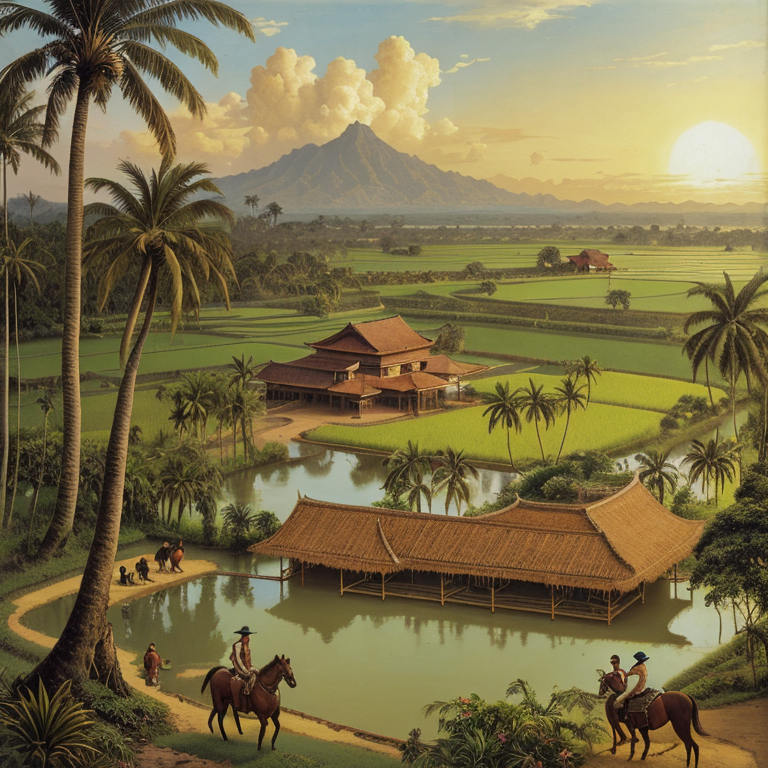
One of the main preoccupations of the Principalia families in the 19th century was the sponsorship of the procession of the santos or holy statues of Our Lord Jesus, the Blessed Virgin Mary, the saints, and holy angels particularly on holy days such as Good Friday and Easter, and the annual town fiesta to mark the feast of its patron saint. In Candaba, the town fiesta is held every November 30, the feast of St. Andrew the Apostle (San Andres or Apung Andres as he is lovingly called by Candabeños). Since they owned haciendas, the Principalia had the means and the manpower to sustain such labor and capital-intensive activities. Capitan Tiago's family were camareros or sponsors for the procession of Mater Dolorosa carried on the family's silver carroza through the streets of Candaba during Good Friday, and for the procession of Mater Alegria on Easter Sunday. Being a camarero also meant Capitan Tiago sponsored the food and refreshments provided to the townsfolk who all turned out during these festivities. His generosity endeared him to the local parish priest. All members of the Principalia attended these public gatherings dressed in their finest clothes. Chinese mestizos, like the Evangelistas, were known for their ostentation, particularly in their manner of dress. Today, this Principalia tradition is still being observed by the Evangelista Clan. The descendants of Don Roman Evangelista y de la Resma in Angeles City, Pampanga, proudly process 16 santos in one carroza during religious occasions in that city. In Candaba, the Jacinto and Gallardo families, descendants of Capitan Tiago's son Dr. Honorio Canciller Evangelista, process the ancient statue of Mater Dolorosa every Good Friday.
On Sunday morning, March 10,1895, tragedy struck the Evangelista family when Capitan Tiago suddenly suffered an ataque cerebral (a stroke) which is the leading cause of death in the Evangelista Clan to this day. By the grace of God, he lived long enough to receive the Sacrament of Extreme Unction, the Last Rites of the Catholic Church at the hands of Fr. Baltasar Gamarra, osa, one of the Augustinian friars at Candaba Church. He was 48 years and 8 months old but his death record puts his age as 49 years old. The church bells tolled the slow and haunting Agunias at the Candaba Church announcing the death of Candaba's richest man and former Gobernadorcillo. His body was washed and dressed in his finest clothes, as was custom, and laid on his bed decorated in black. His death drew his siblings, relatives, friends, neighbors, important personages from around Candaba and nearby towns to the wake where they kept vigil with his young widow Doña Pilar and all of his 13 surviving children, all dressed in black, the color they wore until after the first death anniversary. Every hour, throughout this sad and terrible day, the Candaba Church's bells rang the Plegaria which is the slow ringing of the bells. The Plegaria could not mask the lamentations of his widow and children who only had a few hours to say their final goodbyes. According to Fr. Gamarra, Capitan Tiago was buried on the same day which was not unusual as embalming a body was not yet common. By late afternoon, the Plegaria was rung for the dakit ciriales, a privilige for the rich where 3 church acolytes - the Cross-bearer and two carrying the processional candlesticks called the ciriales - left Candaba Church to accompany Don Santiago's casket in a solemn procession from his house on nearby Calle de la Virgen to the church for a sung solemn Funeral Mass befitting the great man. After the Mass, the Plegaria resumed to accompany the funeral procession to the cemetery with sung prayers said at regular intervals called "posas." According to Fr. Gamarra, Capitan Tiago was buried in the parish cemetery, which could mean the small cemetery on one side of the Candaba Church where members of the Principalia were buried. It was all over in less than 12 hours for the town's richest man and the last of the great hacienderos of Candaba. There was a total lunar eclipse the day he died, when the Earth comes between the Sun and the Moon and its shadow covers the Moon, which many regarded as an omen of things to come. In three years, the Spanish-American War would change the course of Philippine history. It would mark the end of Spanish colonial rule in the country, and with it the end of the Principalia. The American regime would usher in the modern age. The world that Capitan Tiago knew and thrived in would be gone.
The Division of the Estate
He died without leaving a will. At the time of his death, Capitan Tiago left from his third marriage to Doña Pilar, conjugal properties worth P46,234, which he purchased during their nine-year marriage. In addition to this were the properties he purchased during his second marriage worth P41,539. Capitan Tiago's declared estate totaled P87,773.00, this amount reflected the purchase price of the land instead of the prevailing higher 1895 market value, and did not include the assets that were already in the hands of his adult children and their families, and other ancestral lands held by his siblings, uncles, aunts, and cousins. These amounts are based on the public instrument of partition of the late Don Santiago's estate signed on July 8, 1895, and notarized on October 23, 1895, between Don Emiliano Canciller Evangelista y Alonzo and his seven siblings, and their young stepmother Doña Maria Pilar Salunga y Dantis on behalf of herself and her minor children. As far as estate settlements go for the wealthy, this was one of the quickest and most amicable, and was not mired in fights or accusations, at least not yet.
Don Santiago's death was a big loss not only to his young wife, and older children, but more so to his last five minor children with Doña Pilar whose ages ranged from 7 years old (Doña Rosario) to 2 months old (Doña Virginia). It would have a profound impact on all their lives. All of them, except for Doña Rosario, moved away from Candaba when they reached adulthood.
The Division of the Estate of Don Santiago Canciller Evangelista y Tecson
It was only in 1881 when the Spanish authorities decreed that all land owners in Candaba should obtain a "titulo real" (real land title) to avoid any disputes between the landowners. Thus, much of the land owned by the Evangelista Clan prior to 1881 did not have proper land titles. Shortly after the decree was passed, Don Santiago did take steps to begin the process of obtaining proper land titles for his properties. Indeed, at the time of his sudden death, some of the properties he purchased, during his second marriage from October 1877 to March 1883 and during his third marriage from November 1886 to March 1895, had proper land titles. The true size of the estate of Candaba's richest man will never be known since many of the properties he owned were not yet properly registered and could have easily been excluded in the partition agreement whether intentionally or not. The hundreds of hectares of agricultural land (fincas rusticas), and thousands of square meters of land within the town (fincas urbanas) that were declared by his heirs were only valued at the lower purchase price instead of the prevailing market value in the estate settlement. Properties Don Santiago owned prior to his second marriage were not included in the settlement. The estate settlement only mentions 2 fincas urbanas or properties located in town that Don Santiago inherited from his father. The settlement is silent about the fincas rusticas or agricultural lands he would have inherited from his father Don Rosalino who was a haciendero himself, or any land he could have inherited from his grandfather Don Gaspar Evangelista or even his great-grandfather Don Marcos Evangelista who were hacienderos. The estate settlement makes no mention either of any properties Don Santiago may have owned outside Candaba. It is highly likely that only a portion of his entire estate was ultimately declared to the Spanish authorities in 1895. His young widow, Doña Maria Pilar Salunga, would come to this realization some years later which led her to file a lawsuit against her 8 stepchildren in 1907.
The distribution of the declared properties of Don Santiago Canciller Evangelista: All heirs received a cash settlement from the estate.
To his widow Doña Maria Pilar Salunga y Dantis and his five youngest children: All his jewelry, Spanish gold coins, the contents of his house on Calle de la Virgen, including the Vienna furniture, priceless religious statues and the silver carro of the Blessed Virgin Mary; the 3,750 square meters palay warehouse on Calle de Urdaneta which was inherited from Don Rosalino Canciller Evangelista; all the land in Barrio Mapanique and Barrio Ungut.
Don Emiliano Canciller Evangelista y Alonzo: his father's mansion on Calle de la Virgen, several properties in Barrio Salapungan and Barrio Mandili, several heads of cattle, and receivables from individuals who owed his father a lot of money. Don Policarpo Castor had the largest debt at P3,000. Only the debts of the wealthy were included in the estate settlement. The monies owed by Don Santiago's farmer tenants, farm hands, workers, servants, the less fortunate, were not included and were likely forgiven by the Evangelista family.
Doña Ygnacia Canciller Evangelista y Alonzo: the properties in Barrio Magumbali, several properties in Barrio Salapungan, a P1,000 debt owed to her father by Don Juan Ortega of Malabon.
Don Pedro Canciller Evangelista y Alonzo: several parcels of land in Barrio Salapungan. He also inherited one of the larger fishponds of Don Santiago set on nearly 12 hectares of land, as well as livestock, and part of the debt owed by Don Policarpo Castor.
Don Ambrocio Canciller Evangelista y Alonzo: properties in Barrio Magumbali and Salapungan. He also inherited a fishpond used for raising canduli in Barrio Salapungan, and two promissory notes owed to Don Santiago from Georgio Mendoza and Don Ignacio Lapuz.
Doña Luisa Canciller Evangelista y Alonzo: She inherited a building sitting on 2,000 square meters (21,528 square feet) on Calle Real purchased by Don Santiago in 1884, properties in Barrio Salapungan, and livestock.
Don Quintin Canciller Evangelista y Alonzo: properties in Barrio Salapungan, including one of the larger parcels of land at nearly 33 hectares as well as a fishpond used for raising canduli. He also received livestock.
Don Juan Canciller Evangelista y Alonzo: He inherited the 600 square meter (6,458 square feet) building on Calle de Municipio which Don Santiago purchased in May 1890, and several properties in Barrio Salapungan.
Doña Graciana Canciller Evangelista y Alonzo: She inherited the 250 square meter (2,691 square feet) commercial lot on Calle de Urdaneta that Don Santiago inherited from Don Rosalino, her grandfather. She also inherited properties in Barrio Salapungan, including her father's largest fishpond used for raising canduli which covered nearly 20 hectares of land, a P300 debt owed to Don Santiago by Don Quinterio Cabigting, and livestock.
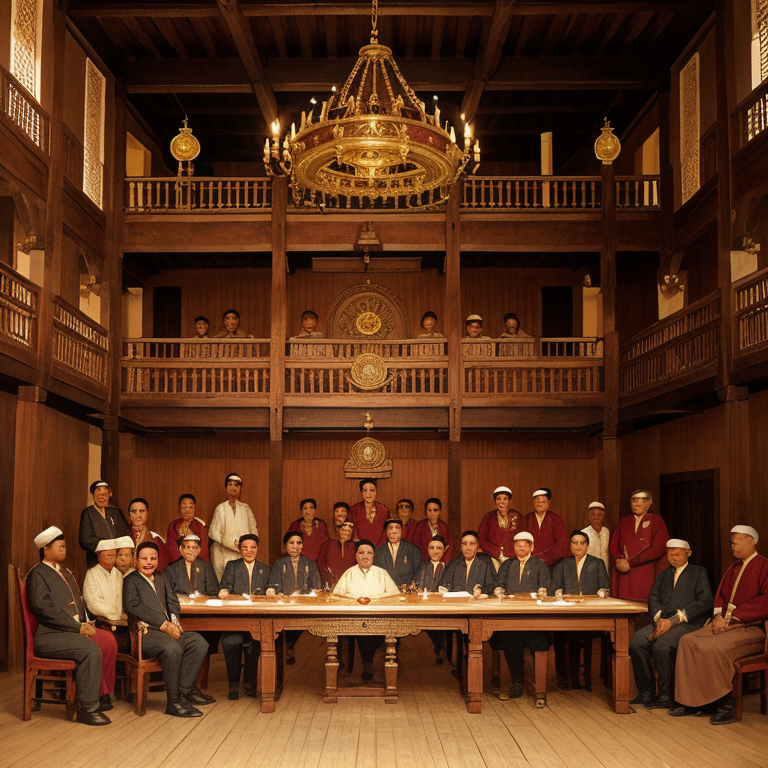
What was Don Santiago's greatest legacy? Beyond the fortune and titles, his greatest legacy are his descendants. He had about 80 grandchildren, and he has countless descendants scattered all over the world today. He is like Abraham in the Old Testament, God made him very fruitful. Just like Abraham whom God made the father of many nations, Don Santiago Canciller Evangelista is the father of many branches in the Evangelista Clan.