An Unlikely Hero
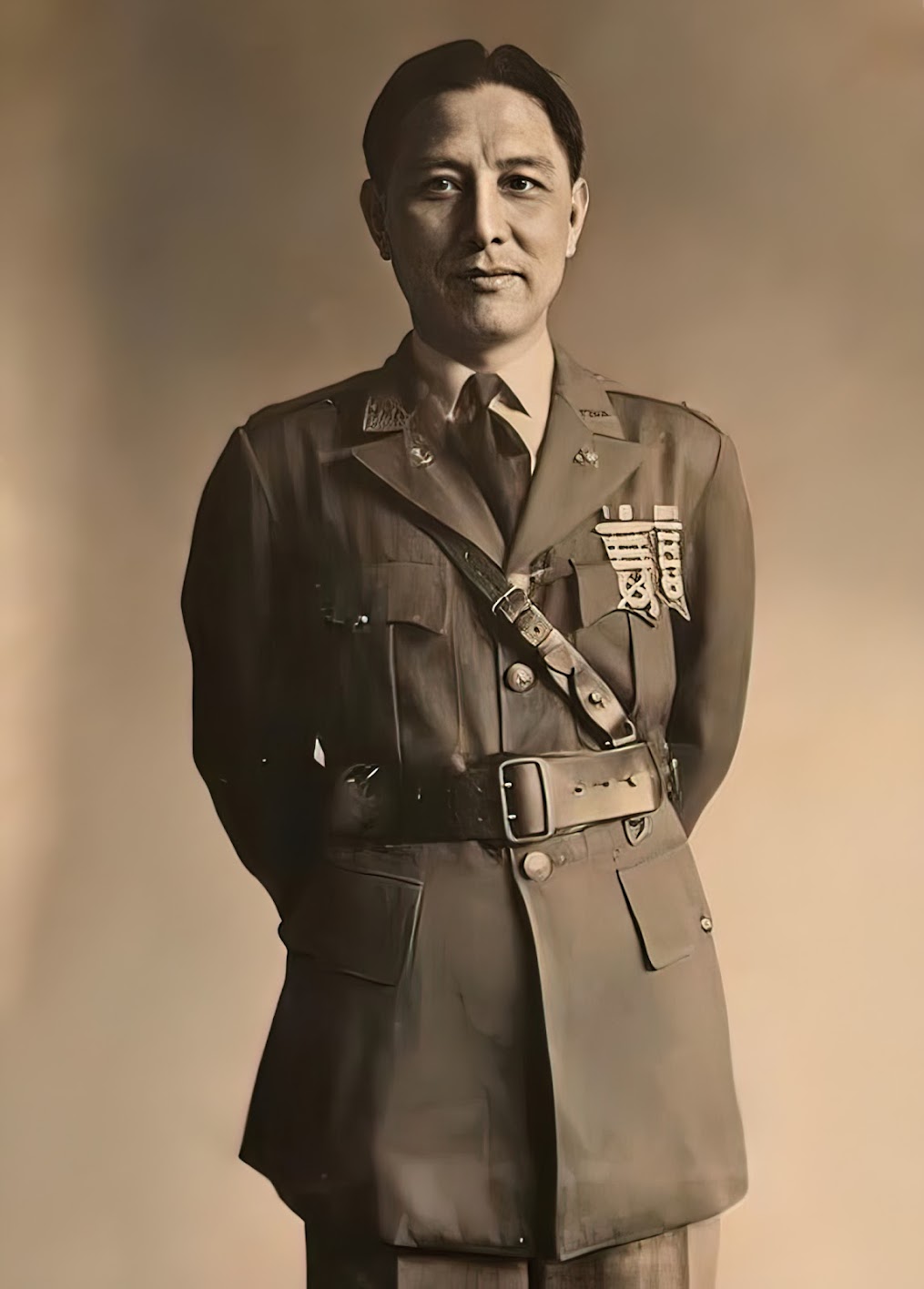
On August 12, 1937, in Shanghai, China, the eve of the Battle of Shanghai between the Chinese Army and the invading Japanese Imperial forces, the leader of the Philippine Company of the Shanghai Volunteers Corps prepared his troops for one of their most dangerous military operations. A multinational militia coming to the aid of their city in distress, led by an Evangelista from Candaba, Pampanga. Captain Honorio Canciller Evangelista, a highly respected veterinarian, stood ready as his men would soon figure in some of the bloodiest urban fighting that would last over three months. The Battle of Shanghai, later described as the Stalingrad on the Yangtze, officially started World War II in China. In putting his life on the line, Captain Evangelista was one of many foreigners defending their families, homes, and their way of life in their once peaceful and prosperous adopted country.
Born into wealth and privilege as the son of Don Santiago Canciller Evangelista and his wife Doña Maria Pilar Salunga y Dantis on November 21,1891, in Candaba, Pampanga, Don Honorio Canciller Evangelista y Salunga seemed the most unlikely of heroes. His family was part of the Principalia, or the noble ruling class. A member of one of the most landed families in Pampanga, he was only 3 years old when his father, the former Gobernadorcillo of Candaba, died suddenly of a stroke on March 10, 1895. He had a very strict upbringing under the watchful eyes of his aristocratic mother who lavished on his education. He was sent to Manila for his studies like many patricians of his day.
As his family owned numerous livestock, Don Honorio graduated as a veterinary surgeon from the College of Manila. In 1913, a year before the Great War which would overtake Europe, he arrived in San Francisco, California on board the ship Chiyo Maru to study for his Doctorate at the San Francisco Veterinary College. In April 1917, just as Don Honorio was wrapping up his postgraduate studies, the United States declared war on Germany and entered World War I. As the first U.S. troops arrived on European soil that June, Don Honorio was drafted into the U.S. Army. His Draft Registration Card described him as single, medium built with brown eyes and black hair. He stood 5 ft. 7 inches tall.
The Paris of the East
On June 6, 1917, the day after he was drafted by the U.S. Army, Don Honorio married his American sweetheart Pauline Kearns (1898-1968) in Oakland, California. There are no records showing that Don Honorio was sent to fight in the European theater. Instead, Don Honorio brought his bride back to the Philippines and on Armistice Day, November 11, 1918, their daughter Peace Kathryne (Katingca) Evangelista y Kearns was born in Manila. Don Honorio set up his veterinary practice in the Philippines’ capital, and the family shuttled between Manila and Candaba until 1925, when Pauline together with their daughter Katingca returned to the United States. On September 1, 1925, Pauline filed for an international divorce which was finalized in October 1926. About a year later, Pauline remarried to Rafael Alvarez Lalinde, a much older wealthy widower who was the pioneer of coffee industrialization in El Salvador. He adopted Peace. For the rest of her life, she was known as Peace Kathryne Alvarez.
By this time, Dr. Honorio Canciller Evangelista had moved to Shanghai, China, a bustling prosperous metropolis then dubbed as the Paris of the East, with his second wife Carmen Lacanilao (1903-1995) of Baliuag, Bulacan. Their union produced a daughter, Leonor Evangelista y Lacanilao, who was born on July 1, 1924. Leonor was such a beautiful mestiza child her paternal grandmother Doña Pilar Salunga really doted on her. Carmen also had another daughter, Asuncion (b. September 27, 1919), from her first marriage to Dr. Federico A. Castro, whom Don Honorio adopted and raised as his own child. His reputation as an outstanding veterinarian had spread so swiftly that in a few short years, Dr. Honorio Canciller Evangelista had moved his prestigious veterinary practice to Shanghai in the 1920s, upon a special invitation of Shanghai’s ruling class to care for their prized horses. This reflected the esteem to which Dr. Evangelista was held by the international social set.
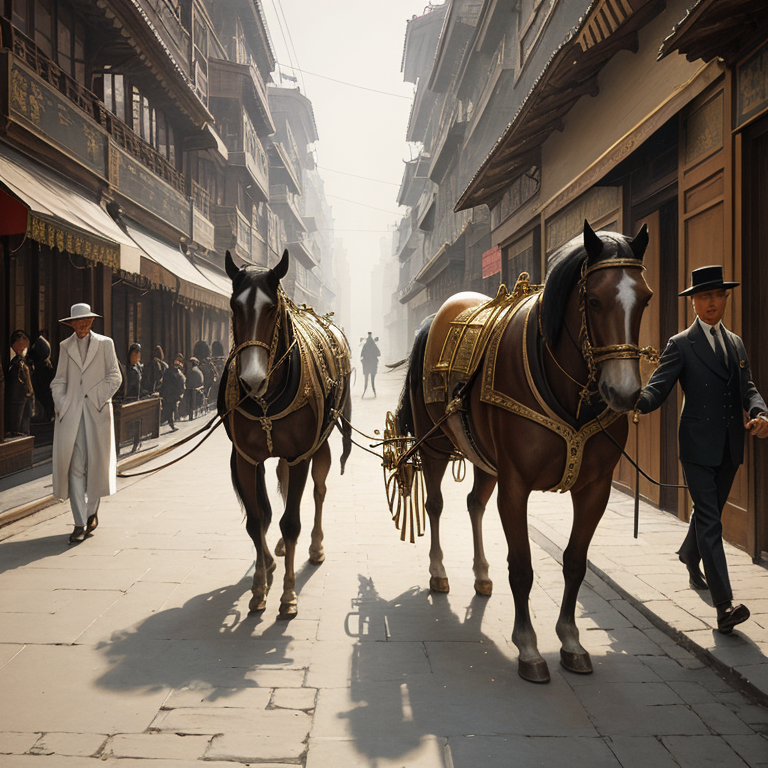
In Shanghai, the Evangelista family lived in one of the most affluent areas, on Hart Road off Bubbling Well Road, in the International Settlement, where most of their neighbors were British and Americans. Their two daughters Asuncion (Sunny) and Leonor (Nonong) lived a life of privilege and made many friends among the children of the elite. They attended a private British school where they acquired British accents. Leonor took riding lessons and became an accomplished equestrienne. She was also encouraged in the arts, which became a lifelong passion, and became an excellent pianist and singer just like many other Evangelista women who came before her. For the young Leonor, it was truly an idyllic childhood.
Dr. Honorio Canciller Evangelista, the only veterinarian in Shanghai in the early 1930s, enjoyed a special place of honor among the elite of the city, from both locals and foreigners alike. A man of varied interests, Dr. Evangelista was an excellent marksman. He won the Municipal Challenge Cup in 1935. He was part of the Filipino Rifle Company, a three-man team which won the Shanghai Rifle Association’s International Cup in 1934 and 1935. Highly respected, Dr. Evangelista also became the Captain of the all-Filipino Company of the Shanghai Volunteers Corps, a multi-ethnic volunteer force under the Shanghai Municipal Council which governed the International Settlement.
War Comes to Shanghai
For over 10 years, Dr. Honorio Canciller Evangelista and his family lived a cosmopolitan lifestyle in the International Settlement. The family would frequently dine and shop at the Cathay Hotel (called the Fairmont Peace Hotel today) an art deco building on the corner of Bund and Nanjing Road which opened in 1929. It was the most luxurious and glamorous hotel east of the Suez. It was Shanghai at its heyday as the bastion of western capitalism. But just as the First World War caught up with him when he lived in San Francisco 20 years earlier, by 1937, Dr. Evangelista found himself in a similar predicament in Shanghai. War was on the horizon. The Japanese Imperial Army had invaded Manchuria in northeast China in 1931. The following year, Shanghai was embroiled in a battle between Chinese and Japanese troops called the January 28 Incident. The fighting lasted until March 3, 1932 when a ceasefire was brokered by the League of Nations. From this point onwards until August 1937, hostilities continued to build up between China and Japan. As it reached its boiling point, Dr. Evangelista’s wife and two daughters fled the chaos in China along with many other foreign nationals. They returned to the safety of the Philippines.
On August 12, 1937, the Shanghai Volunteers Corps was mobilized and its sophisticated team of volunteers (bankers, local investors, lawyers, doctors, engineers, businessmen), including Captain Honorio Canciller Evangelista and his Filipino Company took up their defensive positions along the perimeter of the International Settlement under the B Battalion. The Filipino, Portuguese, and American machine gun companies occupied the Polytechnic Public School on Pakhoi Road. As they waited for the fighting to begin, the International Settlement was inundated with nearly half a million Chinese refugees trying to flee into the safety of the area. Only a short time later, the fighting began and the International Settlement sustained several bombings. In the midst of this chaos, Captain Evangelista lost contact with his family. In taking up arms against the Japanese, Captain Evangelista followed a tradition of heroism in the Evangelista Clan: his eldest half brother Filipino nationalist Don Emiliano Canciller Evangelista was a Filipino Captain in the Philippine-American War (1899-1902), his other half-brother Candaba Municipal Presidente Don Pedro Canciller Evangelista was a Katipunero, bravely fighting to end Spanish Colonial Rule in the Philippines. By the time the battle ended on November 26, 1937, the International Settlement found itself surrounded by Japanese troops. The Filipino Company distinguished itself in the Battle of Shanghai for exemplary display of valor while carrying out several dangerous missions. Captain Evangelista was wounded and a 22-year old Chinese nurse, and Shanghai native, named Nancy Ting looked after him.
For the next five years, the residents of the International Settlement lived a nervous existence until the settlement was finally dissolved on December 8, 1941, when Japanese troops entered and occupied the entire area, and in Hawaii, the Japanese bombed Pearl Harbor. World War II had officially begun. The Shanghai Volunteers Corps was disbanded early in 1942 after the Japanese took over the International Settlement. The decision was formally made by the still existing [Shanghai Municipal Council](https://en.wikipedia.org/wiki/Shanghai_Municipal_Council) who held a reception to mark the placing of the Corps' colours "in a place of dignity and honour" in the Council chambers. With China under Japanese control, thousands of foreigners living in the International Settlement were shipped off to internment camps around China where many perished during the course of the war.
Throughout the Second World War, Dr. Honorio Canciller Evangelista, separated from his wife Carmen and their two daughters, stayed in Shanghai to help the resistance movement, and used his influence to undermine the efforts of puppet Filipino organizations. He also volunteered to care for American internees detained at the Swiss Consulate. He refused any pay for his work, using his own personal fortune in the struggle against the mighty Japanese Imperial Army.
On February 28, 1944, Dr. Evangelista, along with five other Filipinos, were rounded up and arrested by the Japanese Gendarmerie in Shanghai on the grounds of spreading anti-Japanese propaganda and for opposition to the Philippine puppet government under President Jose P. Laurel. Dr. Evangelista was the main target of the Japanese because of his work in the American Section in the Swiss Consulate. The six men were taken to the Japanese Gendarmerie Headquarters at 94 Jessfield Road, Shanghai, where they were detained, beaten and tortured for 3 months. Dr. Evangelista was savagely beaten about the head and body by Japanese Imperial Army Warrant Officer Kunitada Mukoyama (or Kukoyama). The men were finally released in May 1944. Dr. Evangelista was re-arrested shortly thereafter by the Japanese and was sentenced to a 3-year prison term. He was released in June 1945. By this time, Chinese forces had retaken several Chinese cities back from the Japanese. After two atomic bombs were dropped by the United States on Hiroshima and Nagasaki, Japan officially surrendered on September 2, 1945.
After the war, Dr. Honorio Canciller Evangelista testified at the trial of several Japanese charged with war crimes. Kunitada Mukoyama, his torturer, was sentenced to 15 years imprisonment. Refusing salary or reimbursement of expenses, Dr. Evangelista worked pro bono on behalf of United States agencies in Shanghai. For his “exceptionally meritorious service which has aided the United States in the prosecution of war against a common enemy during the period from January 1944 to September 2, 1945,” Dr. Evangelista was decorated by the American Consul General in China with the Medal of Freedom from U.S. President Harry S. Truman. He was also awarded a Ribbon of Merit, and given a Letter of Commendation by a high American military authority in China. Throughout it all, Dr. Evangelista maintained his decorum. He was never the kind who was boastful or would draw attention to himself deliberately.
A Hero Remembered
On January 17, 1948, Dr. Honorio Canciller Evangelista arrived back in San Francisco, California with his last wife Nancy Ting whom he married in Shanghai in 1943. He had had enough of war. Now in his late 50’s, Dr. Evangelista still wanted to make good use of his time and talent. He joined the Bureau of Animal Industry, Agricultural Research Department, United States Department of Agriculture, as an inspector. A year later, H.R. Bill 1866 was introduced into the United States Congress granting him and his wife permanent residency in the United States, a just reward for his service to the country in its time of need during World War II. At that time, the San Francisco Immigration Office called the bill the most meritorious one that was ever referred to their office for review and investigation.
In his golden years, Don Honorio, called Tio Honor (pronounced Cho Onor) or Bapang Norio by his nephews and nieces, was the highly revered elder statesman of the Evangelista Clan. He was the Evangelista everyone in the clan wanted to be close to. Back in the Philippines, the children of his elder sister Doña Natividad Evangelista-Santos, Placer Evangelista Santos, Josefina Santos-Fernandez, Cesar Evangelista Santos, Adelaida Santos-Mansor, and Leticia Evangelista Santos often shared stories about him with the younger generation of Evangelistas, and so the fame of Dr. Honorio Canciller Evangelista continued to spread.
Relatives who visited or immigrated to the United States in the 1950s to the 1970s made it a point to see him at his well-appointed condominium unit on Ellis Street, San Francisco. His half-sister Francisca (Paquita) Hannay-Samson often spent time with him while her teenage daughter Lorna Samson y Hannay was enrolled at the Dominican Convent High School (Class of 1958) in San Raphael, California. His globetrotting nephew Cesar Evangelista Santos, who was also a sharpshooter, forged a strong bond with him during his visits to San Francisco. In 1962, his grandniece Angela Myrna (Baby) Mansor-Viray (granddaughter of his sister Doña Natividad Canciller Evangelista-Santos) traveled to San Francisco with her husband Wilfredo (Willie) Diño Viray, from Chicago where Willie was studying for his Master’s degree. In August 1968, grandnephew Dr. Jose Limjoco Evangelista (grandson of his half-brother Don Pedro Canciller Evangelista) and his wife Dr. Stella Salgado-Evangelista made it a point to pay their respects to him the day they landed in the United States for their postgraduate studies. Dr. Jose Evangelista visited him again in 1975 with two of his sons who recited poems to their great-granduncle Norio. The happy reunion culminated with a family luncheon.
On a more personal note, Don Honorio was also reconciled with his daughters Asunción Evangelista-Gallardo and Leonor Evangelista-Jacinto, and their families, who all eventually immigrated to the United States in the late 1960s.
Asunción had married Mayor Anastacio Gallardo, who served several terms as Mayor of Candaba from 1946-1949, 1952-1956, 1961- 1966, until he was assassinated by the Huks (communist rebels) in July 1966. Mayor Gallardo, along with five escorts, were ambushed and murdered as they rode toward Manila for a conference with President Diosdado Macapagal on lawlessness in central Luzon. Gallardo, who had fought the Huks for 20 years, was the 10th mayor to be murdered by them in central Luzon in the last two years. Mayor Anastacio Gallardo and Asunción Evangelista had 9 children: Corinna Gallardo-Canivel, Brenda Gallardo, Melanio Gallardo, Luisito Gallardo, Jeanette Gallardo-Magbitang, Irving Gallardo, Ramon Gallardo, Gizelle Gallardo, and Cheryl Gallardo-Flores y Evangelista.
Leonor, who blossomed into a great beauty with a charming persona just like her father, had married Emmanuel Jacinto y Tinawin, a lawyer. Together they had 11 children: Honorio Jacinto (popularly known as Norrie Jacinto, “The Neil Sedaka of the Philippines”), Emmanuel Jacinto, Jr., Emylene Jacinto (Mrs. Rogelio “June” de Jesus), Deborah Jacinto, Leonor Jacinto (Mrs. Ed los Banos), Gervacio Jacinto, Beverly Jacinto-Mojica, Bernadette Jacinto-Camino, Carmela Jacinto (Mrs. Robert de Castro), Veronica Jacinto (Mrs. Guillermo Canas), and Regina Jacinto (Mrs. Amman Verzosa) y Evangelista. Leonor, who possessed the legendary Evangelista aristocratic bearing, passed on her artistic talents to her children. The Evangelista-Jacinto was a lively musical/singing family. Her children played a variety of instruments including the piano and guitar. Leonor also had a successful run on the Philippine stage where she starred as Ensign Nellie Forbush in the musical show of South Pacific. She was a devout Catholic, and her deep prayer life, love, and faith in God sustained her throughout the years.
By the mid-1970s, when he was in his eighties, Don Honorio’s health began to decline. In April 1978, three weeks before his death, Dr. Jose Limjoco Evangelista, one of the most prominent cardiologists today, visited his granduncle one last time at a nursing home in San Francisco. He was suffering from pneumonia. At the beginning of May, Arturo Santos ( son of Cesar Evangelista Santos), and his wife Milagros Gerona-Santos, while vacationing in the United States from Manila, visited Lolo Norio at a hospital in San Francisco just a few days before his death. He was no longer conscious, and his wife Nancy was at his side.
The last surviving child of Don Santiago Canciller Evangelista and Doña Maria Pilar Salunga y Dantis, Don Honorio Canciller Evangelista - the pride of Candaba and the Evangelista Clan - passed away peacefully at home on May 7,1978. Arturo and Milagros Santos received a telegram from Nancy Ting-Evangelista notifying them of his death while they were in New York. Two of his daughters Peace Kathryne and Leonor, and his grandchildren, were present at his wake. His daughter Asuncion was still in the Philippines. He was laid to rest at Cypress Lawn Cemetery, in Colma, California. A simple tombstone marks the grave of one of the greatest Evangelistas who ever lived, who made a great selfless contribution to humanity.
His daughter Peace Kathryne, who studied Nursing, never married, and passed away on November 24, 1995, in Ventura, California. Her mother Pauline Kearns, Don Honorio’s first wife, died in San Francisco in 1968. His second wife, Carmen Lacanilao-Evangelista, died in 1995 and was buried at Cypress Lawn Cemetery. Her grave is not far from Don Honorio’s. Nancy Ting-Evangelista died in 1998 and is buried together with her husband.
Don Honorio’s two other daughters Asunción and Leonor were blessed with long lives, and lived into their nineties. They were both widows. Asuncion passed away on May 27, 2016 aged 96. Almost a year later, Leonor, passed from this life at her home in Federal Way, Washington, on May 23, 2017, 40 days short of her 93rd birthday. The two sisters who had been close all their lives could not last long without the other. As Leonor was being wheeled out into the funeral car, her children played Glenn Miller’s Moonlight Serenade, the theme song of their parents. Their children remembered them dancing to this music every time when they were growing up. It was a very solemn and dignified farewell to their beloved mother, and youngest child of the singular and distinguished Dr. Honorio Canciller Evangelista. “God is the architect. We are the draftsmen,” Leonor had said. “We must trust in God. He takes care of everything. Once we understand what our role is, then and how we got here, everything falls into place."
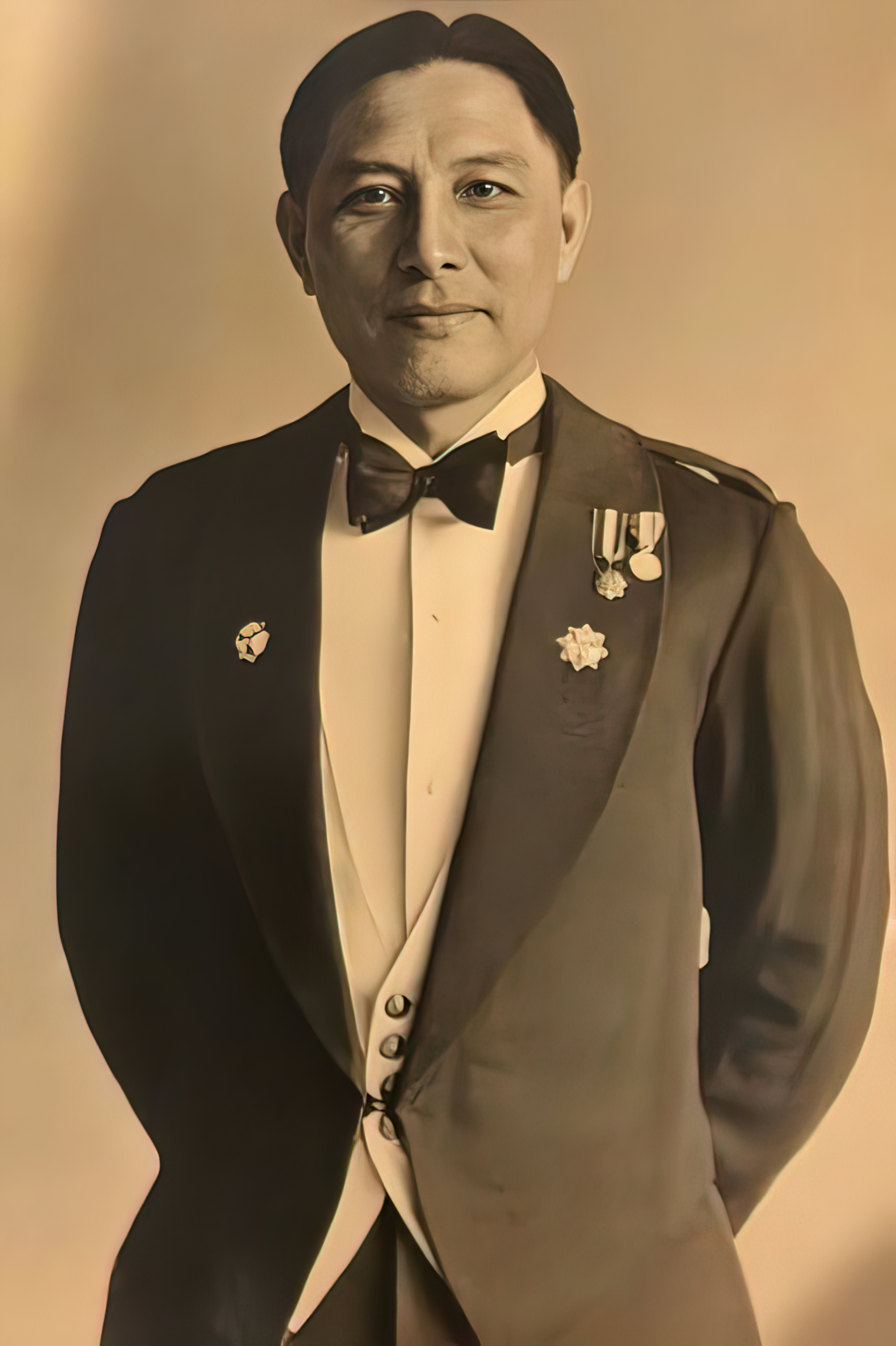
In 2019, the Chinese government announced it would erect a monument in Dr. Honorio Canciller Evangelista’s honor, a statue in his image in what was once called Manila Road in Shanghai. A fitting tribute to a great man. For his heroic and exemplary conduct during some of mankind's darkest days, Dr. Honorio Canciller Evangelista does not just belong to the Evangelista Clan, he belongs to the world.