
No one escapes the hands of tragedy. Whether she visits early or at the latter part, she makes her way into one’s life. It was the tragic death of Don Santiago Canciller Evangelista’s grandson Tomas Evangelista y Gumabon in the southern seas of the Philippines that brought his young widow, Corazon Ranara-Evangelista and their two children, Ambrosio and Zenaida Evangelista y Ranara, to Candaba and into the bosom of the Evangelista Clan.
Tragedy and a New Beginning
Tomas Evangelista (b. December 21, 1902), a pharmacist by education and training, and an adventurer, had moved to beautiful Camiguin Island in the Bohol Sea, off the northern coast of Mindanao in the 1930s. In Camiguin he founded the Laboratorio de Evangelista, a forerunner of modern day pharmaceutical companies. At the Laboratorio, Tomas invented, developed, and produced various medications in tablet form, cures, tonics using his own formulas. The remedies he created proved so highly effective that within a short period the pharmacy’s clientele grew to include customers from other islands stretching as far as Cebu, some 142 miles away.
A highly eligible bachelor, Tomas met and married Corazon Ranara y Bano (b. 1920) who came from a prominent local family. The Ranaras were one of the founders of the municipality of Mahinog in the province of Camiguin. On April 17, 1941, the couple were blessed with a son whom they named Ambrosio. That same year, Tomas purchased land in Midsayap, Cotabato. He was beginning to cement his place in the south just as his forefathers did north in Candaba, Pampanga. On June 24, 1943, a daughter, Zenaida, was born to the couple.
With a burgeoning enterprise and a growing family, Tomas had so much to look forward to. In August 1944, he took a trip to the island of Cebu with his father-in-law and two brothers-in-law to deliver his pharmaceutical products. The party traveled by boat. On the way back to Camiguin Island, their boat got caught in the middle of a storm and capsized. Only one of Tomas’ brothers-in-law survived when he miraculously was washed ashore. He was found by locals on another island and nursed back to health by nuns. According to the lone survivor’s account, all four travelers initially survived the sinking of the vessel but with no rescue in sight three eventually drowned at sea. Tomas Evangelista’s date of death is recorded as August 29, 1944. He was only 41 years old. In short order, Corazon Ranara-Evangelista became a widow at 24, with two small children to raise. Ambrosio was 2 years old and Zenaida, 10 months old. She had also lost her father and a brother.
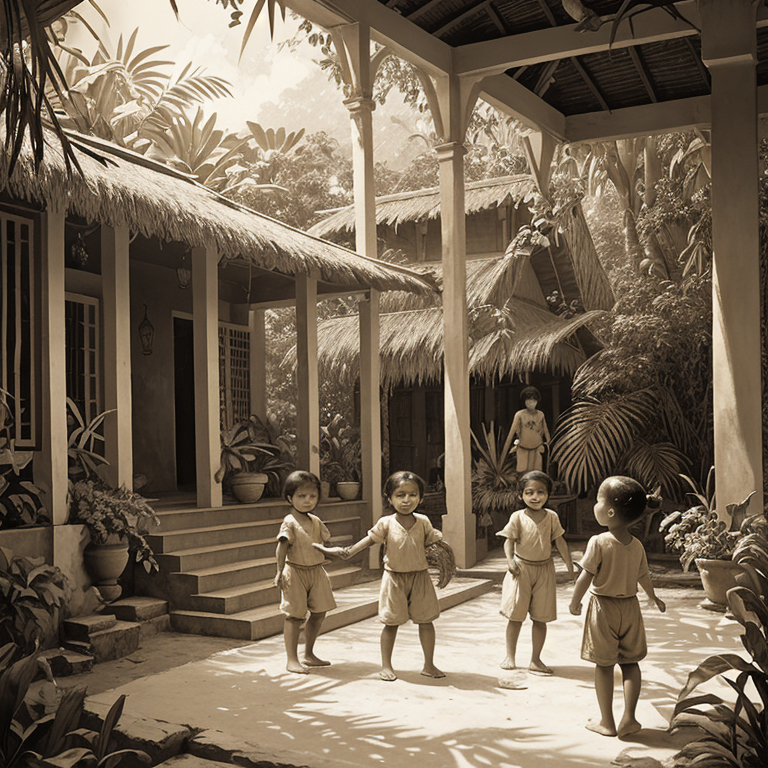
It was Ambrosio who was first sent to Candaba to live with his Evangelista uncles and aunts and cousins after the end of the Second World War. His little sister missed him so much that she called out his name looking for him everyday. Corazon finally relented. Mother and daughter traveled to Candaba and the family was finally reunited. Coming from a brood of 11 children born to Don Ambrocio Canciller Evangelista and Doña Juanaria Gumabon, Tomas had no shortage of siblings who could help raise his two children. He had four unmarried sisters, two of whom - the beautiful Ester and strong-willed Pacifica - played a significant role in the upbringing of the children. Their nephew and niece most surely reminded them of their brother, and through his children their brother Tomas continued to live on.
Growing Up Evangelista
Zenaida remembered growing up in the mansion owned by her paternal grandparents Don Ambrocio Canciller Evangelista and Doña Juanaria Gumabon.It was a beautiful bahay na bato set on a large parcel of land easily covering three lots on Pescadores Street. According to Zenaida, Pescadores was renamed Evangelista Street because most of Don Santiago Canciller Evangelista’s children built mansions on that street. It was a two story mansion with both floors fully equipped with its own kitchen and living quarters. There were staircases located in the front and the back of the house which lead to the second floor. To a child, the stairs seemed so high and steep that Zenaida remembered often calling out for help to climb it. Their grandparents' house was tastefully decorated with antiques. Though the siblings never met their grandparents, Don Ambrocio and Doña Juanaria, there were two large portraits of them hanging in the Sala which their older cousins used to scare them. There was an orchard on one side of the property teeming with fruit trees they could pick from including santol, sineguelas trees which delighted Tomas’ children to no end. Some scenes of the 1961 movie “Noli Me Tangere,” which was filmed entirely in Candaba, Pampanga, were filmed at Don Ambrocio’s magnificent bahay na bato.
Zenaida recalled what fun it was to grow up with numerous cousins living nearby. There were weekly family get-togethers. At Christmastime, their aunts would take Zenaida and Ambrosio and walk over to the homes of relatives to greet the elders of the Evangelista Clan as a sign of respect. This happy season of Christmas and New Year’s were marked with reunions, dancing, and great merriment. During the rainy season, the Pinac de Candaba, now more famously known as the Candaba Swamp, would flood and the waters would get very deep. She and her cousins would take boat rides there where they snacked on hominy corn. Since they all possessed the “Evangelista eyes” or chinito eyes, locals who caught a glimpse of them while boating would point them out exclaiming, “There goes the Chinese!” Invariably, a member of the boating party would respond with an amusing parting shot.
The two aunts took prodigious care of their young charges. According to Zenaida, they were very strict and very proper ladies, well-mannered, and were quite overprotective. The children were not permitted to eat “street food” sold by vendors around Candaba. This decree proved challenging to Zenaida who often pined for the local delicacies particularly during the town fiestas. Her aunts would insist on eating home-cooked meals to ensure the quality of its ingredients and cleanliness. They tried to instill good values and proper conduct to their nephew and niece. Zenaida began piano lessons in her teenage years, in the tradition of many Evangelistas who came before her. Her favorite piece? Chopin’s Polonaise in B-flat major. Zenaida was sent to study at the Colegio de Nuestra Señora del Carmen in Barasoain, Malolos, Bulacan, a strict Roman Catholic private school run by the [Augustinian Sisters of Our Lady of Consolation](https://en.wikipedia.org/wiki/Order_of_Saint_Augustine) where many of her Evangelista cousins were also internas (student boarders). It was the first time Zenaida lived away from family since she arrived with her mother in Candaba when she was toddler. She was a student boarder at del Carmen for four years. To celebrate Zenaida’s high school graduation in 1959, cousin Cenen Evangelista y Limjoco, a grandson of Don Pedro Canciller Evangelista (Don Ambrocio’s brother), invited Zenaida to go out dancing along with their other cousins. Her aunts reluctantly gave permission, giving strict instructions that she could join her cousins “but don’t dance.”
In college, Zenaida decided to follow in the footsteps of the father she never knew and become a pharmacist. She enrolled at the College of Pharmacy at the University of Santo Tomas, Manila. She recalled that during her internship at a pharmacy in Manila, a pharmacist who realized she was an Evangelista from Candaba told her that he knew most of the palay harvested in Candaba was owned by the Evangelistas.
Zenaida’s remembrances of growing up an Evangelista in Candaba are her recuerdos or souvenirs which she carries in heart. Though her grandparents’ home, and the town of Candaba itself were the scene of so many happy and important events in her young life, she knew from experiencing an early loss of a parent that those moments would not last. Her father’s siblings including her two Evangelista aunts who valiantly helped rear her and her brother Ambrosio died one by one. Don Ambrocio’s house was sold. Many in her generation - all professionals - moved away from Candaba and scattered all over the world.
Siblings Ambrosio and Zenaida Evangelista immigrated to the United States. Ambrosio married Elena Co y Gallardo in Camiguin Island in 1973, before moving to California. They have two children: Alvin Clyde and Arlene Carol Evangelista y Co. Zenaida married Jesse Sabino y Ymson and bore two daughters: Evelyn Sabino-Azcueta and Emily Sabino-Mangoba y Evangelista. Zenaida studied Nursing and became a registered nurse. She was widowed in 1998. Their courageous mother Corazón Ranara-Evangelista joined her children in the United States. She died in February 2011 in Los Angeles, California in her 90th year. She had seen her children through the difficult times, and under her guidance they had weathered them all. She lived long enough to see Ambrosio and Zenaida reap the financial rewards of all their hard work. Brother and sister still own the Evangelista ancestral land in Candaba that they inherited from their father Tomas Evangelista’s estate, one of the few remaining Evangelistas to do so.
A Father's Legacy
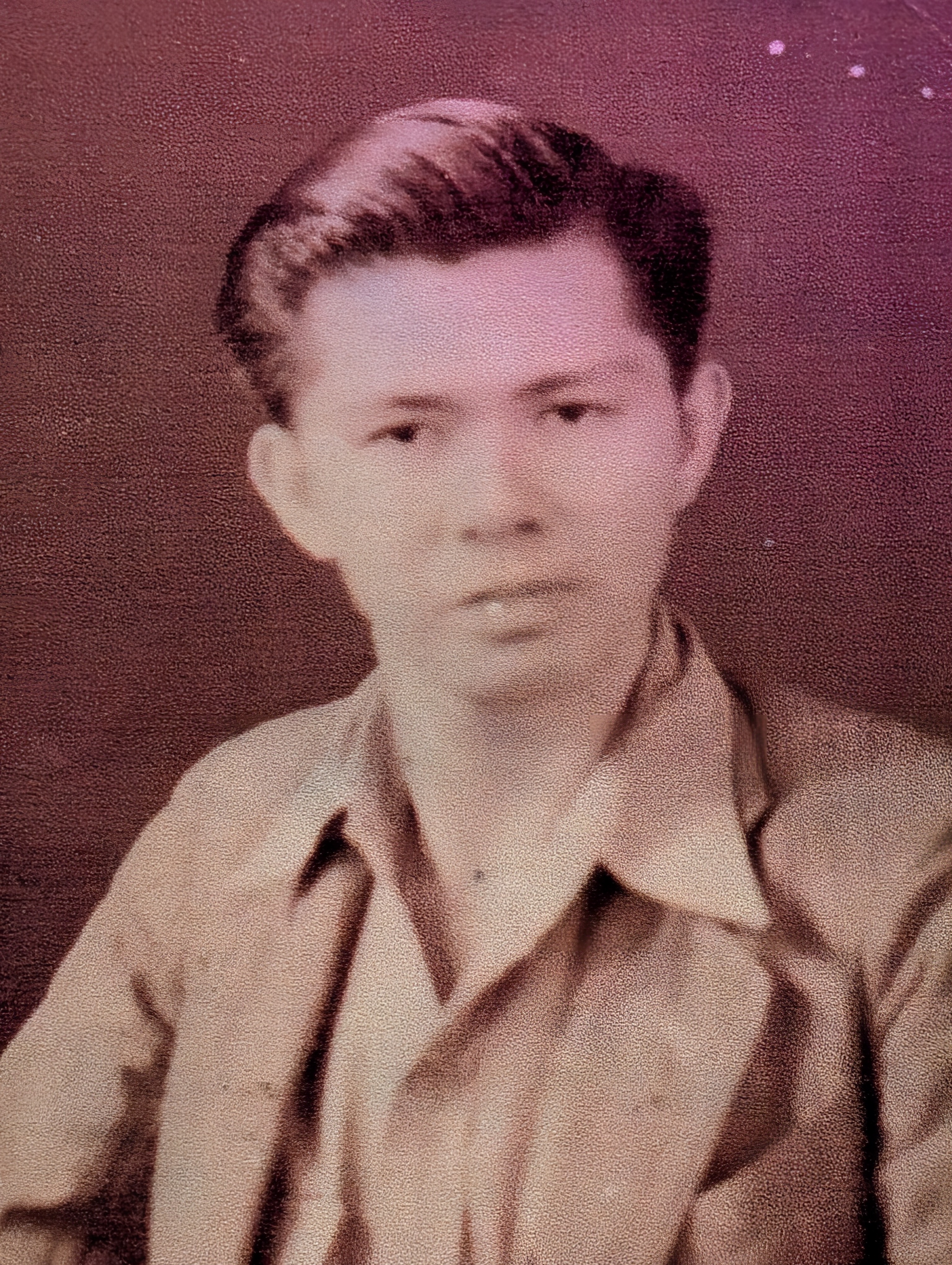
From her large home in Las Vegas, Nevada, where she now lives, Zenaida reminisces on her loved ones who have gone on ahead of her from this life. She misses her dear husband and her mother. A few years ago, she was able to visit Camiguin Island where she was born, and Candaba where she grew up. Her father Tomas Evangelista’s name comes up every now and then along with discussions on “what could have been.” Had Tomas survived that sea voyage almost 80 years ago, how large would the Evangelista pharmaceutical company be today? Her thoughts then turn to the present and the future, and what could be. It was this same sense of “what could be” that brought a forward-thinking pharmacist and inventor Tomas Evangelista to Camiguin Island all those years ago. She is, in the end, her father’s daughter.